

Limitations of Blind-Spot Collision-Avoidance Assist
Blind-Spot Collision-Avoidance Assist may not operate properly, or Blind-Spot Collision-Avoidance Assist may operate unexpectedly under the following circumstances:
-
There is inclement weather, such as heavy snow, heavy rain, etc.
-
The rear corner radar is covered with snow, rain, dirt, etc.
-
The temperature around the rear corner radar is high or low
-
Driving on a highway (or motorway) ramp
-
The road pavement (or the peripheral ground) abnormally contains metallic components (i.e. possibly due to subway construction).
-
There is a fixed object near the vehicle, such as sound barriers, guardrails, central dividers, entry barriers, street lamps, signs, tunnels, walls, etc. (including double structures)
-
Driving in large areas where there are few vehicles or structures (i.e. desert, meadow, suburb, etc.)
-
Driving through a narrow road where trees or grass are overgrown
-
Driving on a wet road surface, such as a puddle on the road
-
The other vehicle drives very close behind your vehicle, or the other vehicle passes by your vehicle in close proximity
-
The speed of the other vehicle is very fast that it passes by your vehicle in a short time
-
Your vehicle passes by the other vehicle
-
Your vehicle change lane
-
Your vehicle has started at the same time as the vehicle next to you and has accelerated
-
The vehicle in the next lane moves two lanes away from you, or when the vehicle two lanes away moves to the next lane from you
-
A trailer or carrier is installed around the rear corner radar
-
The bumper around the rear corner radar is covered with objects, such as a bumper sticker, bumper guard, bike rack, etc.
-
The bumper around the rear corner radar is impacted, damaged or the radar is out of position
-
Your vehicle height is low or high due to heavy loads, abnormal tire pressure, etc.
Blind-Spot Collision-Avoidance Assist may not operate properly, or the function may operate unexpectedly when the following objects are detected:
-
A motorcycle or bicycle is detected
-
A vehicle such as a flat trailer is detected
-
A big vehicle such as a bus or truck is detected
-
A moving obstacle such as a pedestrian, animal, shopping cart or a baby stroller is detected
-
A vehicle with low height such as a sports car is detected
Differential braking control may not work, driver’s attention is required in the following circumstances:
-
The vehicle severely vibrates while driving over a bumpy road, uneven road or concrete patch
-
Driving on a slippery surface due to snow, water puddle, ice, etc.
-
The tire pressure is low or a tire is damaged
-
The brake is reworked
-
The vehicle makes abrupt lane changes
For more details on the limitations of the front view camera, refer to Forward Collision-Avoidance Assist (FCA) (Sensor fusion).
-
Driving on a curved road
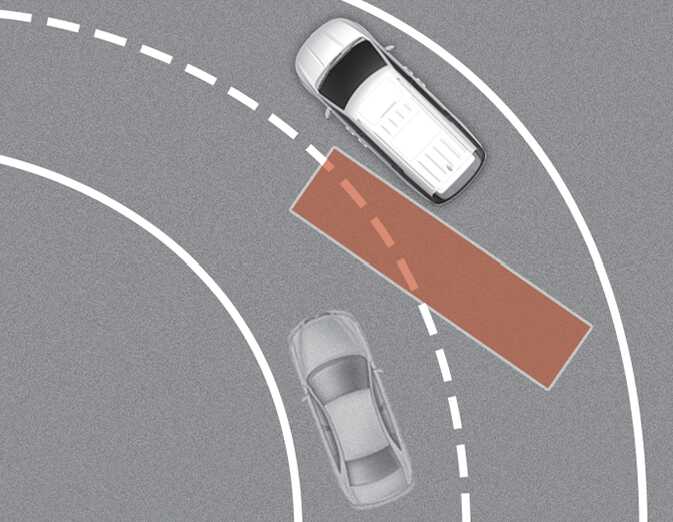 OSP2052033
Blind-Spot Collision-Avoidance Assist may not operate properly when driving on a curved road. Blind-Spot Collision-Avoidance Assist may not detect the vehicle in the next lane.
Always pay attention to road and driving conditions while driving.
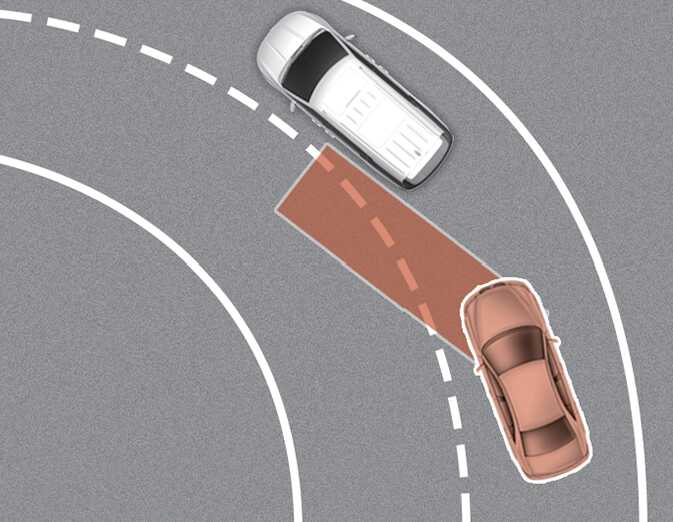 OSP2052034
Blind-Spot Collision-Avoidance Assist may not operate properly when driving on the curved road. Blind-Spot Collision-Avoidance Assist may recognize the vehicle in the same lane.
Always pay attention to road and driving conditions while driving.
-
Driving where the road is merging/ dividing
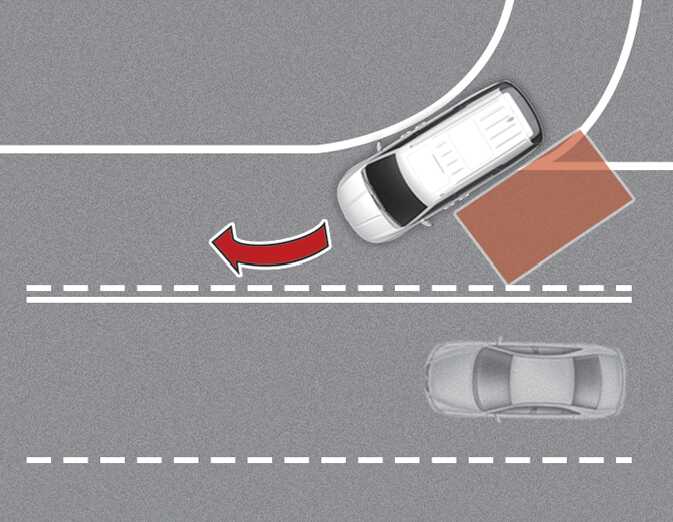 OSP2052035
Blind-Spot Collision-Avoidance Assist may not operate properly when driving where the road merges or divides. Blind-Spot Collision-Avoidance Assist may not detect the vehicle in the next lane. Always pay attention to road and driving conditions while driving.
-
Driving on a slope
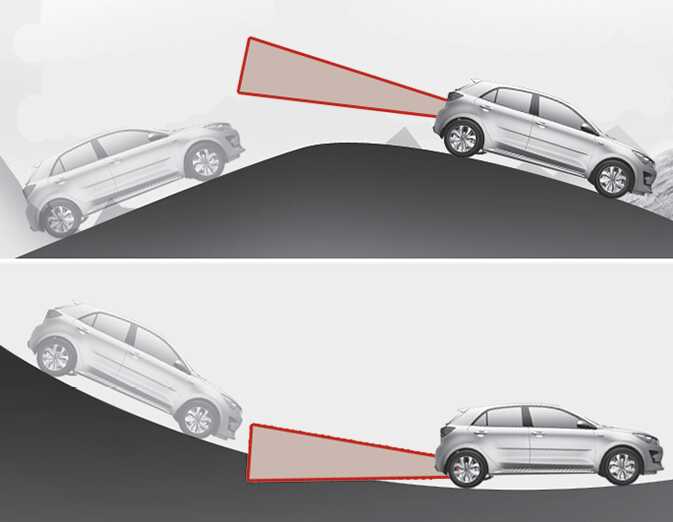 OYB052163L0
Blind-Spot Collision-Avoidance Assist may not operate properly when driving on a slope. Blind-Spot Collision-Avoidance Assist may not detect the vehicle in the next lane or may incorrectly detect the ground or structure.
Always pay attention to road and driving conditions while driving.
-
Driving where the heights of the lanes are different
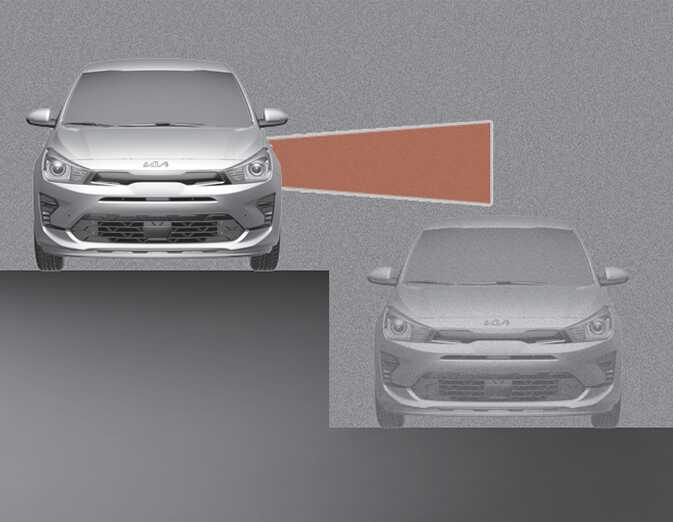 OYB052164L0
Blind-Spot Collision-Avoidance Assist may not operate properly when driving where the heights of the lanes are different. Blind-Spot Collision-Avoidance Assist may not detect the vehicle on a road with different lane heights (underpass joining section, grade separated intersections, etc.).
Always pay attention to road and driving conditions while driving.
-
When you are towing a trailer or another vehicle, make sure that you turn off Blind-Spot Collision-Avoidance Assist.
-
Blind-Spot Collision-Avoidance Assist may not operate properly if interfered by strong electromagnetic waves.
-
Blind-Spot Collision-Avoidance Assist may not operate for 15 seconds after the vehicle is started, or the rear corner radars are initialized.