

Limitations of Rear Cross-Traffic Collision-Avoidance Assist
Rear Cross-Traffic Collision-Avoidance Assist may not operate properly or it may operate unexpectedly under the following circumstances:
-
Departing from where trees or grass is overgrown
-
Departing from where roads are wet
-
Speed of the approaching vehicle is fast or slow
Braking control may not work, driver's attention is required in the following circumstances:
-
The vehicle severely vibrates while driving over a bumpy road, uneven road or concrete patch
-
Driving on a slippery surface due to snow, water puddle, ice, etc.
-
The tire pressure is low or a tire is damaged
-
The brake is reworked
For more details on the limitations of the rear corner radar, refer to Blind-Spot Collision-Avoidance Assist (BCA).
-
Driving near a vehicle or structure
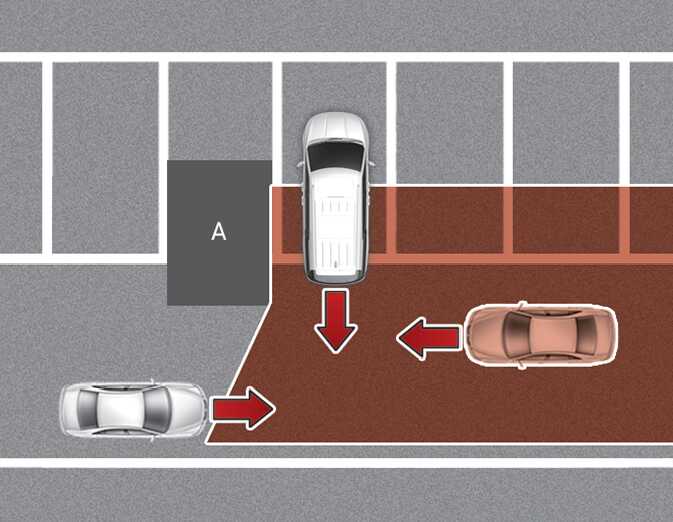
[A]: Structure
Rear Cross-Traffic Collision-Avoidance Assist may be limited when driving near a vehicle or structure, and may not detect the vehicle approaching from the left or right. If this occurs, Rear Cross-Traffic Collision-Avoidance Assist may not warn the driver or control the brakes when necessary.
Always check your surroundings while backing up.
-
When the vehicle is in a complex parking environment
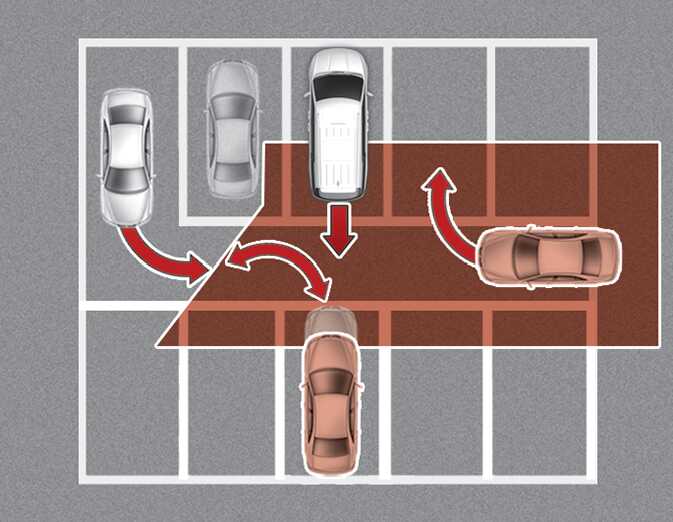
Rear Cross-Traffic Collision-Avoidance Assist may detect vehicles which are parking or pulling out near your vehicle (e.g. a vehicle leaving beside your vehicle, a vehicle parking or pulling out in the rear area, a vehicle approaching your vehicle making a turn, etc.). If this occurs, Rear Cross-Traffic Collision-Avoidance Assist may unnecessarily warn the driver and control the brake.
Always check your surroundings while backing up.
-
When the vehicle is parked diagonally
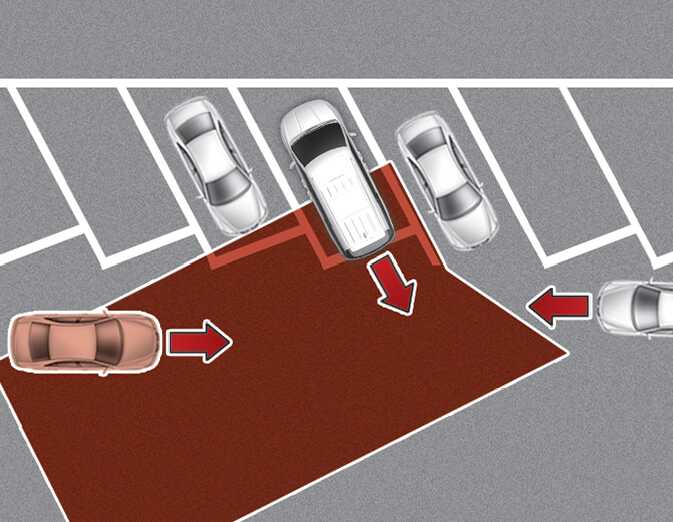
Rear Cross-Traffic Collision-Avoidance Assist may be limited when backing up diagonally, and may not detect the vehicle approaching from the left or right. If this occurs, Rear Cross-Traffic Collision-Avoidance Assist may not warn the driver or control the brakes when necessary.
Always check your surroundings while backing up.
-
When the vehicle is on or near a slope
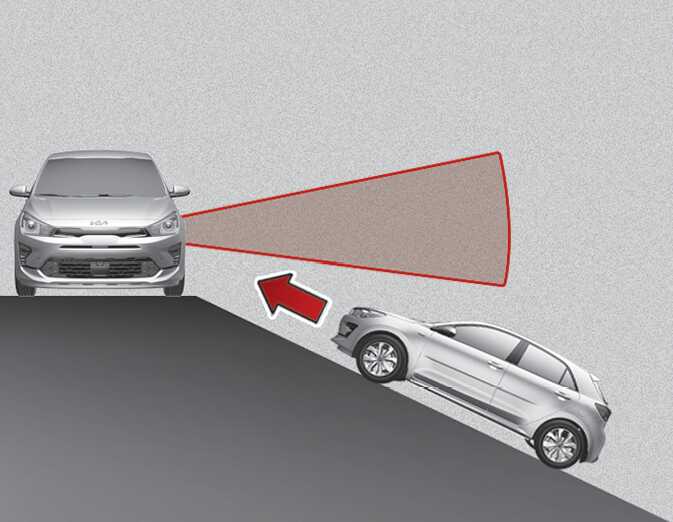
Rear Cross-Traffic Collision-Avoidance Assist may be limited when the vehicle is on a uphill or downhill slope, or near it, and may not detect the vehicle approaching from the left or right. If this occurs, Rear Cross-Traffic Collision-Avoidance Assist may not warn the driver or control the brakes when necessary.
Always check your surroundings while backing up.
-
Pulling into the parking space where there is a structure
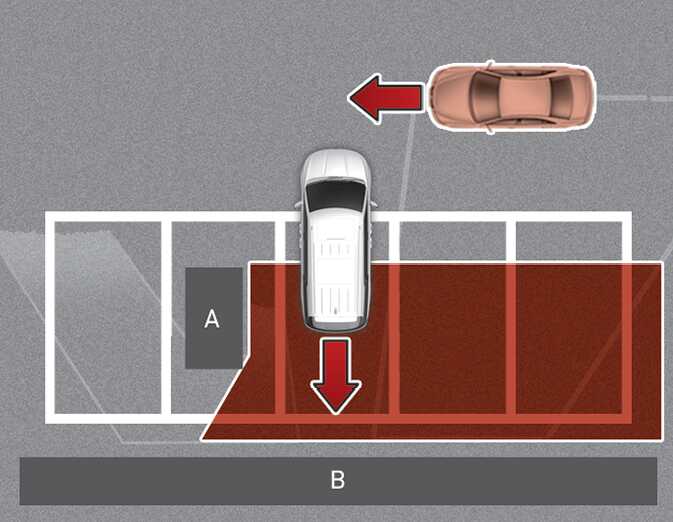
[A]: Structure, [B]: Wall
Rear Cross-Traffic Collision-Avoidance Assist may detect vehicles passing by in front of you when parking backwards into a parking space with a wall or structure in the rear or side area. If this occurs, Rear Cross-Traffic Collision-Avoidance Assist may unnecessarily warn the driver and control the brake.
Always check your surroundings while backing up.
-
When the vehicle is parked rearward
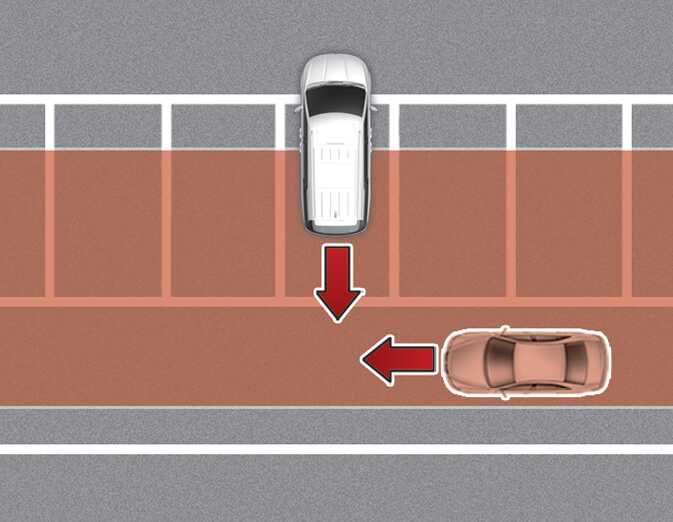
Rear Cross-Traffic Collision-Avoidance Assist may detect vehicles passing by behind you when parking backwards into a parking space. If this occurs, Rear Cross-Traffic Collision-Avoidance Assist may unnecessarily warn the driver and control the brake.
Always check your surroundings while backing up.
-
When you are towing a trailer or another vehicle, we recommend that Rear Cross-Traffic Collision-Avoidance Assist is turned off due to safety reasons.
-
Rear Cross-Traffic Collision-Avoidance Assist may not operate properly if interfered by strong electromagnetic waves.
-
Rear Cross-Traffic Collision-Avoidance Assist may not operate for 3 seconds after the vehicle is started, or the rear corner radars are initialized.