

Driving in sand or mud
-
Maintain slow, constant speed and engage the accelerator pedal slowly to ensure safe driving and prevent the wheels from slipping.
-
Maintain sufficient following distance from the vehicle ahead.
-
Reduce speed and always check road conditions.
-
To prevent getting stuck, avoid speeding, rapid acceleration, sudden braking, and sharp turns.
-
Your vehicle’s wheels may not operate when stuck in snow, sand or mud. This is to protect the transmission and is not a malfunction.
Forcibly moving your vehicle to get it out of mud or sand can cause:
-
Damage to your vehicle
-
Damage to your tires
-
The engine to overheat
-
Damage to or breakdown of your transmission, differential, or AWD systems
If the wheels slip excessively after you enter a sandy or muddy road, your vehicle may fall into the sand or mud. In this case, place a stone or tree branch under the tire, then try to pull out the vehicle or get it unstuck by repeatedly moving back and forth.
Transmission overheated
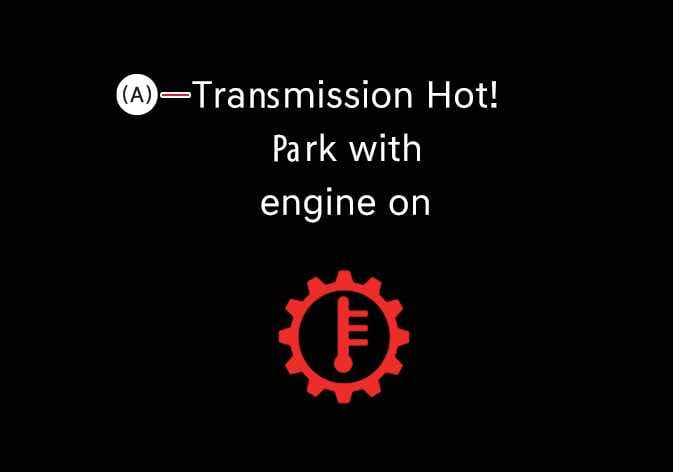 OMQ4A035133 |
(A) Transmission Hot! Park with engine on |
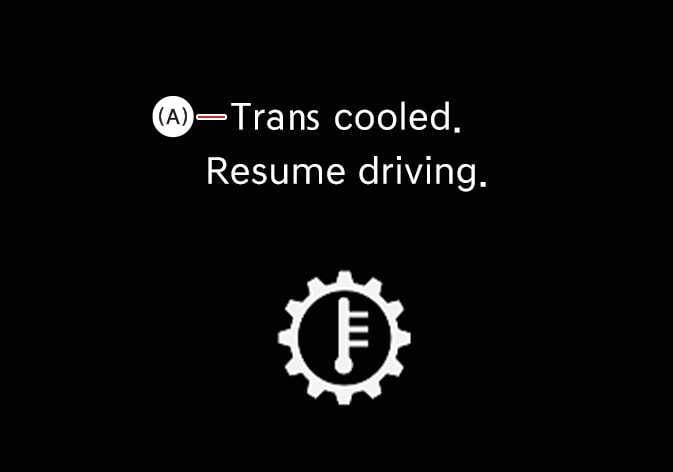 OMQ4A035135 |
(A) Trans cooled. Resume driving. |
-
The transmission can overheat when you drive on extremely muddy or sandy roads.
-
When the transmission overheats, safe protection mode activates, and the “Transmission Hot! Park with engine on” warning message appears on the instrument cluster and an audible warning sounds.
-
Pull over to a safe location, stop your vehicle with the engine running, engage the brake pedal, shift the gear to P (Park), and allow the transmission to cool.
-
Driving conditions may worsen if you ignore this warning. You may experience abrupt shifts, frequent shifts, and jerkiness. To return to normal driving conditions, you should park your vehicle and allow the transmission to cool for a few minutes (with the engine ON) before driving again.
-
You can continue to drive your vehicle when the message “Trans cooled. Resume driving” appears.
If any of the warning messages on the instrument cluster continue to blink, have the system inspected by an authorized Kia dealer.
Tire precautions
Always pay attention to tires for AWD vehicles.
AWD applies driving force to all 4 wheels, which means the condition of the tires greatly affects driving performance:
-
When replacing tires, be sure all 4 tires are of the same size, type, tread, brand, and load-carrying capacity. Do not equip your vehicle with tires of a different size or type than what was originally installed on your vehicle. This can affect the safety and performance of your vehicle, which could lead to steering failure or rollover and cause serious injury.
-
Rotate the front and rear tire positions every 6,000 miles (10,000 km).
-
When it is cold outside, you should check each tire monthly and maintain the inflation pressure recommended on your Kia placard or tire inflation pressure label.
-
Install chains on all 4 tires of your AWD vehicle, and keep your travel distance as short as possible to prevent damage to the AWD system. For more information, refer to Tire chains.
Towing precautions
|
|
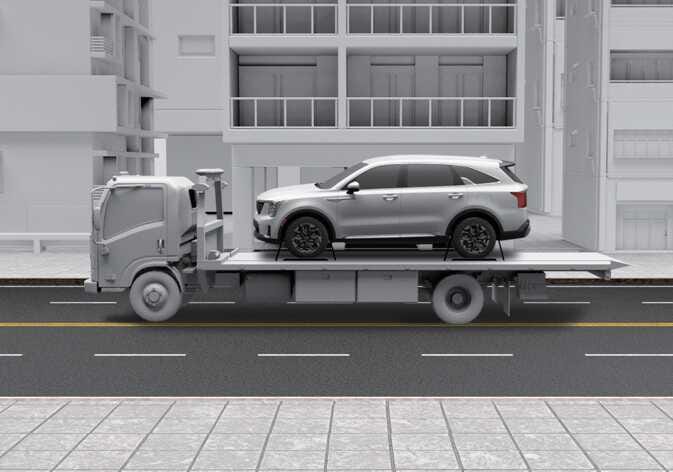
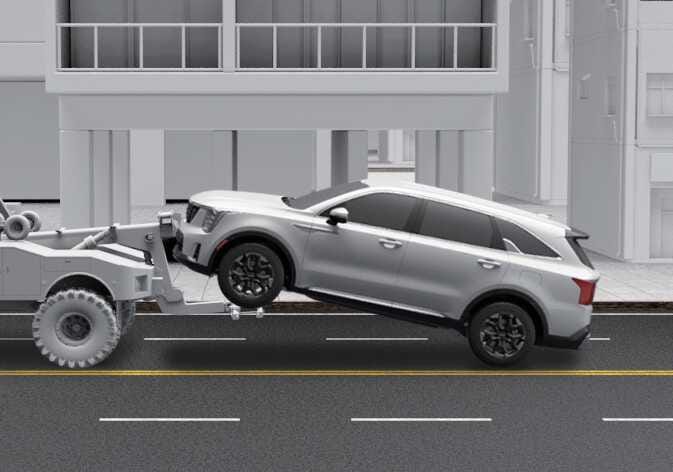
An AWD vehicle should never be towed with wheels on the ground. Your vehicle must be towed with a wheel lift and dollies or flatbed equipment so that none of the wheels are on the ground.
For more information, refer to Towing.
An AWD vehicle cannot be towed with sling-type equipment. Use a wheel lift or flatbed equipment.
Your vehicle is equipped with tires that make handling and riding in your vehicle safer. Do not use tires or wheels that are different in size and type from the original ones. This can affect the safety and performance of your vehicle, which could lead to steering failure or a rollover and result in serious injury. When replacing the tires, be sure that all 4 tires and wheels are the same size, type, tread, and brand and have the same load-carrying capacity.
Jacked vehicle
While an AWD vehicle is being raised on a jack, never start the engine or cause the tires to rotate. If rotating tires touch the ground, your vehicle could move the jack and jump forward.
-
AWD vehicles must be tested with a special 4-wheel chassis dynamometer.
TIPNever apply the parking brake while performing these tests.
-
An AWD vehicle should not be tested with a FWD roll tester. If a FWD roll tester must be used, follow these steps:
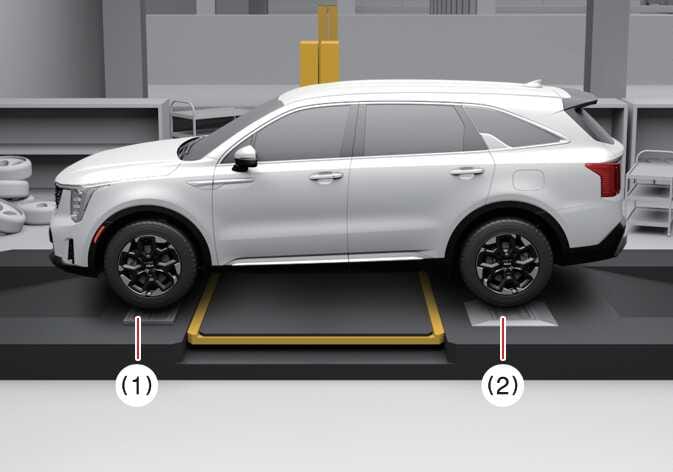 OMQ4A045026
-
Roll tester
-
Temporary free roller
-
-
Check the recommended tire pressure for your vehicle.
-
Place the driven wheels on the roll tester (1) for a speedometer test.
-
Release the parking brake.
-
Place the non-driven wheels on the temporary free roller (2).
Dynamometer testing
Stay away from the front of your vehicle while it is in gear on the dynamometer, as the vehicle can jump forward and cause serious injury or death.
-
When lifting the vehicle, do not operate the front and rear wheels separately. You should operate all 4 wheels.
-
If you need to operate the front and rear wheels when lifting your vehicle, release the parking brake.