

Special driving conditions
In poor weather or road conditions, you should drive even more carefully than usual.
Hazardous driving conditions
When you encounter water, snow, ice, mud, sand, or similar hazards on the road, follow these suggestions:
-
Drive cautiously and allow extra distance for braking.
-
Avoid sudden braking or steering.
-
Do not pump the brake pedal on a vehicle equipped with Anti-Lock Braking System (ABS).
-
If you are stalled in snow, mud, or sand, shift to the 2nd gear and accelerate slowly to avoid spinning the drive wheels.
-
Use sand, rock salt, or another nonslip material under the drive wheels to provide traction when you are stalled in ice, snow, or mud.
Reducing the risk of a rollover
This multi-purpose passenger vehicle is defined as a Sports Utility Vehicle (SUV). Utility vehicles have a significantly higher rollover rate than other types of vehicles. SUVs have higher ground clearance and narrower tracks to make them capable of performing in a wide variety of offroad applications.
Specific design characteristics give SUVs a higher center of gravity than conventional passenger vehicles. An advantage of the higher ground clearance is a better view of the road, which allows you to anticipate problems.
They are not designed to turn at the same speeds as conventional passenger vehicles, any more than low-slung sports vehicles are designed to perform satisfactorily in off-road conditions. Due to this risk, Kia strongly recommends that you and your passengers buckle your seat belts.
In a rollover crash, an unbelted person is significantly more likely to die than a person wearing a seat belt. To reduce the risk of a rollover while you are driving:
If at all possible, avoid sharp turns or abrupt maneuvers, do not load your roof rack with heavy cargo, and never modify your vehicle in any way.
Rollover
As with other Sports Utility Vehicles (SUVs), failure to operate this vehicle correctly might result in loss of control of your vehicle, an accident, or a vehicle rollover.
-
Utility vehicles have a significantly higher rollover rate than other types of vehicles.
-
Specific design characteristics (such a higher ground clearance, narrower track, and so on) give this vehicle a higher center of gravity than ordinary vehicles.
-
A SUV is not designed for cornering at the same speeds as conventional vehicles.
-
Avoid sharp turns or abrupt maneuvers.
-
In a rollover crash, an unbelted person is significantly more likely to die than a person wearing a seat belt. Make sure everyone in the vehicle is properly buckled up.
Your vehicle is equipped with tires designed for safe driving and handling. Do not use tires and wheels of a different size and type from the originally installed ones. This can affect the safety and performance of your vehicle, which could lead to steering failure or a rollover and cause serious injury. When replacing the tires, be sure that all four tires and wheels are the same size, type, tread, brand, and load-carrying capacity.
Rocking the vehicle
If it is necessary to rock the vehicle to free it from snow, sand, or mud, first turn the steering wheel right and left to clear the area around your driven wheels. Then, shift back and forth between R (Reverse) and any forward gear.
Do not race the engine, and spin the wheels as little as possible. If you are still stuck after a few tries, have the vehicle pulled out by a tow vehicle to avoid engine overheating and possible damage to the transmission.
Sudden Vehicle Movement
Do not attempt to rock the vehicle if people or objects are nearby. The vehicle might suddenly move forward or backward as it becomes unstuck.
Vehicle rocking
Prolonged rocking may cause overheating of the vehicle, transmission damage or failure, and tire damage.
Spinning tires
Do not spin the wheels, especially at speeds more than 56 km/h (35 mph). Spinning the wheels at high speeds when the vehicle is stationary could overheat and damage tires, and the rotating wheels may fly away and injure bystanders.
The Electronic Stability Control (ESC) should be turned OFF prior to rocking the vehicle.
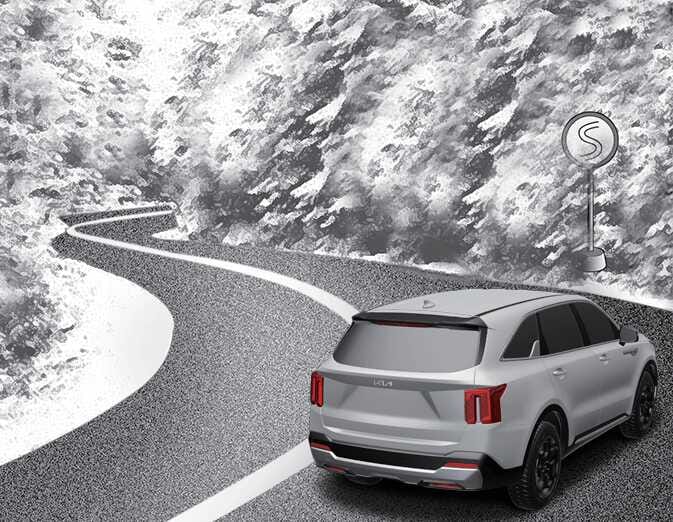
Smooth turning
 OMQ4043036L |
Avoid braking or gear changing in corners, especially when roads are wet. Ideally, corners should always be taken under gentle acceleration. If you follow these suggestions, tire wear will be held to a minimum.
Driving at night
 OMQ4043037 |
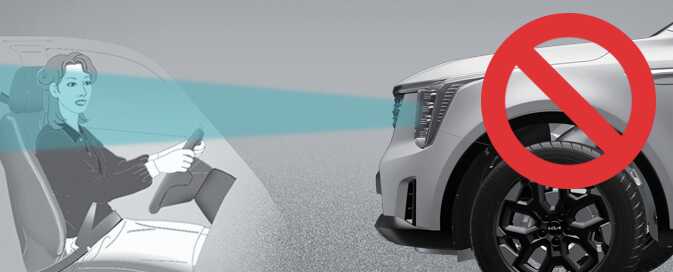
Because driving at night is more hazardous than driving in the daylight, here are some important tips to remember:
-
Slow down and keep more distance between you and other vehicles, as it may be more difficult to see at night, especially in areas without any street lights.
-
Adjust your mirrors to reduce the glare from other driver’s headlights.
-
Keep your headlights clean and properly aimed. (On vehicles not equipped with the automatic headlight aiming feature.) Dirty or improperly aimed headlights will make it much more difficult to see at night.
-
Avoid staring directly at the headlights of oncoming vehicles. You could be temporarily blinded, and it will take several seconds for your eyes to readjust to the darkness.
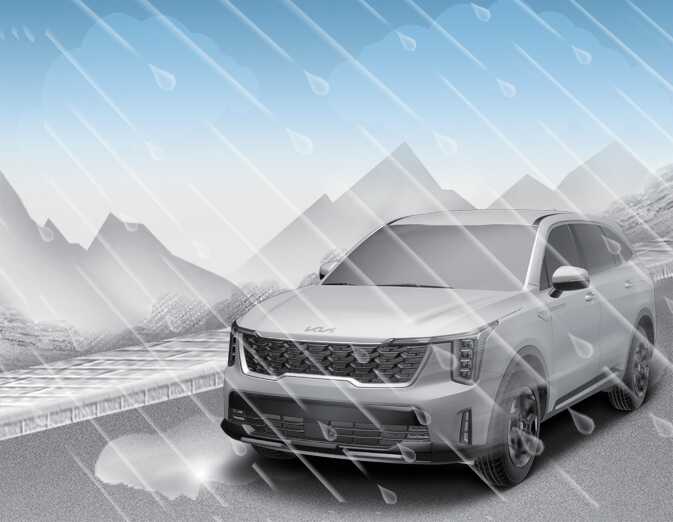
Driving in the rain
 OMQ4043061L |
Rain and wet roads can make driving dangerous, especially if you're not prepared for the slick pavement.
Here are a few things to consider when driving in the rain:
-
A heavy rainfall makes it harder to see and increases the required stopping distance for your vehicle, so slow down.
-
Keep your windshield wiping equipment in good shape. Replace your windshield wiper blades when they show signs of streaking or miss areas of the windshield.
-
If your tires are not in good condition, stopping quickly on wet pavement can cause you to skid and possibly lead to an accident. Be sure your tires are in good shape.
-
Turn on your headlights to make it easier for others to see you.
-
Driving too fast through large puddles can affect your brakes. If you must drive through puddles, try to drive through them slowly.
-
If you believe you may have gotten your brakes wet, apply them lightly while driving until normal braking operation returns.
Hydroplaning
If the road is wet enough and you are going fast enough, your vehicle may have little or no contact with the road surface and actually ride on the water. The best advice is SLOW DOWN when the road is wet.
The risk of hydroplaning increases as the depth of tire tread decreases, refer toTires and wheels.
Driving in flooded areas
Avoid driving through flooded areas unless you are sure the water is no higher than the bottom of the wheel hub. Drive through any water slowly. Allow adequate stopping distance after driving through water because it may affect brake performance.
After driving through water, dry the brakes by gently engaging them several times while driving the vehicle slowly.
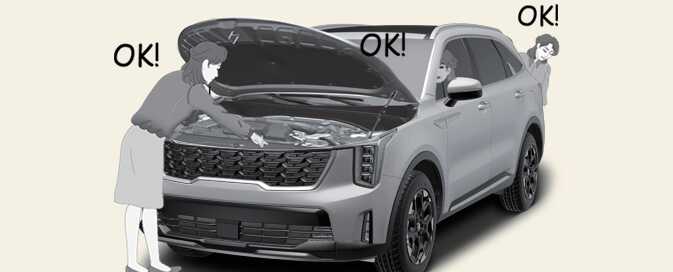
Highway driving
 OMQ4043038 |
Adjust the tire inflation pressures to specification. Low tire inflation pressures will result in overheating and possible failure of the tires.
Avoid driving with worn or damaged tires, which may result in reduced traction or tire failure.
Never exceed the maximum tire inflation pressure shown on the tires.
Underinflated or overinflated tires
Always check the tires for proper inflation before driving. Underinflated or overinflated tires can cause poor handling, loss of vehicle control, and sudden tire failure, leading to accidents, injuries, and even death. For proper tire pressures, refer to Tires and wheels.
Tire tread
Always check the tire tread before driving your vehicle. Worn out tires can result in loss of control of the vehicle. Replace worn out tires as soon as possible. For further information and tread limits, refer to Tires and wheels.
High speed travel consumes more fuel than urban motoring. Do not forget to check both the engine coolant and engine oil.
A loose or damaged drive belt may cause the engine to overheat.