
Reverse Parking Distance Warning Malfunction and Precautions
Reverse Parking Distance Warning malfunction
Reverse Parking Distance Warning has a self-diagnosis function that can determine whether the ultrasonic sensor is working properly. After starting the engine, a beep will sound when the gear is shifted to R (Reverse) to indicate the function is operating normally.
However, if one or more of the following occurs, first check whether the ultrasonic senior is damaged or whether the function is in a non-operating condition. If it still does not work properly, have your vehicle inspected by an authorized Kia dealer.
-
The audible warning does not sound.
-
The buzzer sounds intermittently.
-
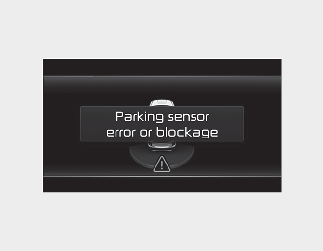
The 'Parking sensor error or blockage' warning message appears on the cluster.

-
Reverse Parking Distance Warning is a supplemental function. The operation of the function can be affected by several factors (including environmental conditions). It is the responsibility of the driver to always check the front and rear views before and while parking.
-
Always look around your vehicle to make sure there are no objects or obstacles before moving the vehicle in any direction to prevent a collision.
-
Your new vehicle warranty does not cover any accidents or damage to the vehicle or injuries to its occupants related to a Reverse Parking Distance Warning.
-
Pay close attention when driving near objects, pedestrians, and especially children. Some objects may not be detected by the ultrasonic sensors, due to the objects distance, size or material, all of which can limit the effectiveness of the sensor.
-
Reverse Parking Distance Warning may not operate normally when:
-
Moisture is frozen to the sensor (It will operate normally when the frozen moisture melts)
-
Sensor is covered with foreign matter, such as snow or water (It will operate normally when the material is removed or the sensor is no longer blocked.)
-
The weather is extremely hot or cold
-
The sensor is pushed, scratched or struck with any hard and sharp objects that could damage the surface.
-
High pressure water is directly applied to ultrasonic sensor.
-
Heavy rain or water spray is present.
-
The sensor is covered with snow.
-
Affected by another vehicle's sensors
-
Water flows on the surface of the sensor
-
Driving on uneven road surfaces such as unpaved roads, gravel, bumps, or gradient.
-
Wireless transmitters or mobile phones present near the sensor.
-
Installing the license plate differently from the original location
-
Accessories, such as license plate molding or sticker, are installed on the sensor area.
-
The vehicle bumper height or sensor installation has been modified.
-
-
The following objects may not be recognized by the sensor:
-
Sharp or slim objects such as ropes, chains or small poles.
-
Undetectable objects smaller than 100 cm (40 in) and narrower than 14 cm (5.5 in) in diameter.
-
Objects, which tend to absorb sensor frequency such as clothes, spongy material or snow.
-
-
If it does not work properly, have your vehicle inspected by an authorized Kia dealer.
Precautions of Reverse Parking Distance Warning
-
Reverse Parking Distance Warning may malfunction if the vehicle bumper height or sensor installation has been modified or damaged. Any non-factory installed equipment or accessories may also interfere with the sensor performance.
-
When the sensor is frozen or covered with snow, dirt, or water, the sensor may be inoperative until the material is removed using a soft cloth.
-
Do not push, scratch or strike the ultrasonic sensor. Sensor damage could occur.
-
Do not spray the ultrasonic sensors or its surrounding area directly with a high pressure washer.
Make sure that high pressure is not directly applied to the surface of the ultrasonic sensor while using use high-pressure car washes.
This function can only sense objects within the range and location of the sensors; It can not detect objects in other areas where sensors are not installed. Also, small or slim objects, such as poles or objects located between sensors may not be detected by the sensors.
Always visually check behind the vehicle when backing up.
Be sure to inform any drivers of the vehicle that may be unfamiliar with the function regarding the functions capabilities and limitations.

Pay close attention when the vehicle is driven close to objects on the road, particularly pedestrians, and especially children. Be aware that some objects may not be detected by the sensors, due to the object's distance, size or material, all of which can limit the effectiveness of the sensor. Always perform a visual inspection to make sure the vehicle is clear of all obstructions before moving the vehicle in any direction.