

Supplemental Restraint System (SRS) components and functions
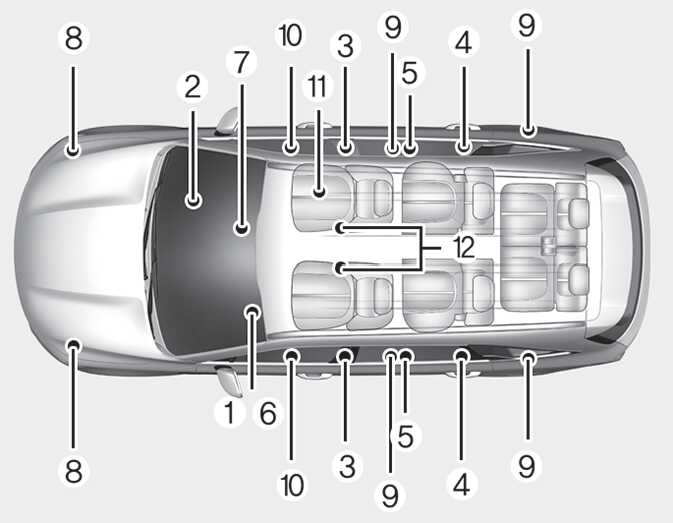
The actual position of SRS components may differ from the illustration.
The SRS consists of the following components:
-
Driver's front air bag module
-
Passenger's front air bag module
-
Side air bag modules
-
Curtain air bag modules
-
Retractor pre-tensioner assemblies
-
Air bag warning light
-
SRS control module (SRSCM)/rollover sensor
-
Front impact sensors
-
Side impact sensors
-
Side pressure sensors
-
Occupant Detection System
-
Front driver/passenger's seat belt buckle sensor
The SRSCM continually monitors all elements while the ENGINE START/STOP Button is in the ON Position or approximately within 3 minutes after vehicle off to determine if a frontal, near-frontal impact or side impact is severe enough to require air bag deployment or pre-tensioner seat belt deployment.
The SRS air bag warning light on the instrument panel will appear for about 3 ~ 6 seconds after the ENGINE START/STOP button is turned to the ON position, after which the air bag warning light should go out.
If any of the following conditions occurs, this indicates a malfunction of the SRS. In this case, have the system inspected by an authorized Kia dealer.
-
The light does not turn on briefly when you turn the ENGINE START/STOP button ON.
-
The light stays on after illuminating for approximately 6 seconds.
-
The light comes on while the vehicle is in motion.
-
The light blinks when the ENGINE START/STOP button is in ON position.
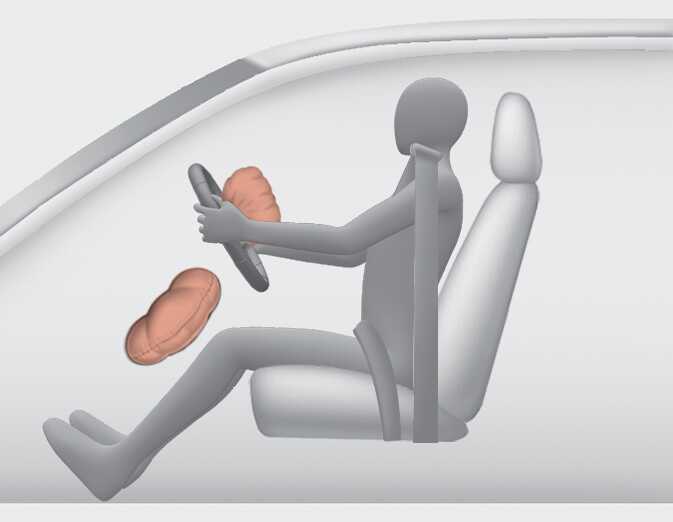
The air bag modules are located both in the center of the steering wheel and in the front passenger's panel above the glove box. When the SRSCM detects a sufficiently severe impact to the front of the vehicle, it will automatically deploy the front air bags.
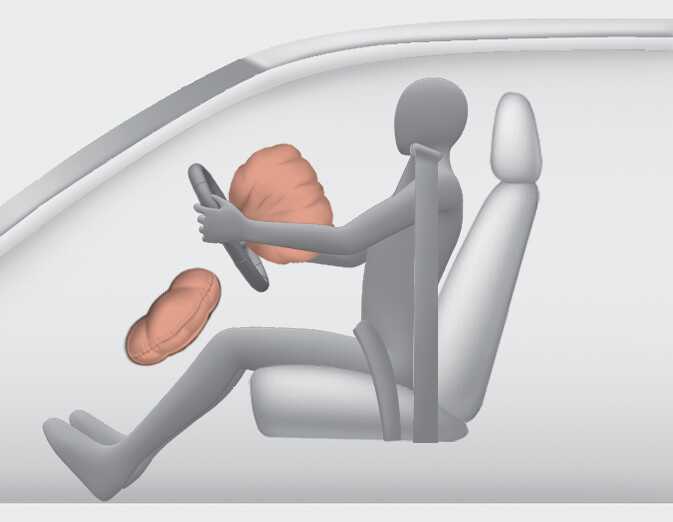
Upon deployment, tear seams molded directly into the pad covers will separate under pressure from the expansion of the air bags. Further opening of the covers then allows full inflation of the air bags.
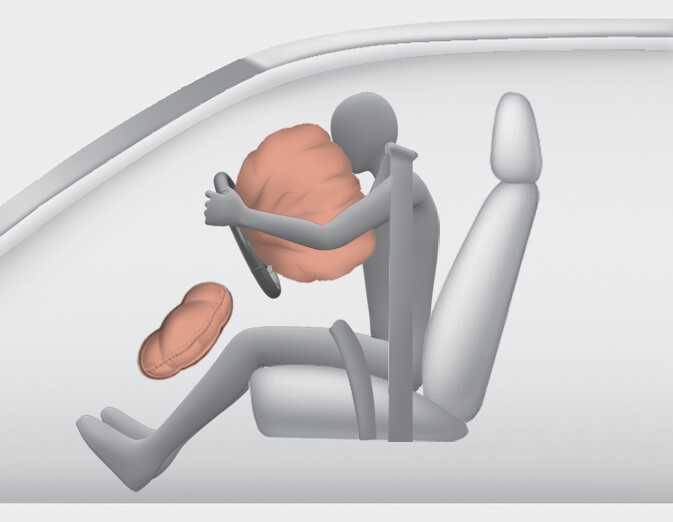
A fully inflated air bag, in combination with a properly worn seat belt, slows the driver's or the passenger's forward motion, reducing the risk of head and chest injury.
After complete inflation, the air bag immediately starts deflating, enabling the driver to maintain forward visibility and the ability to steer or operate other controls.
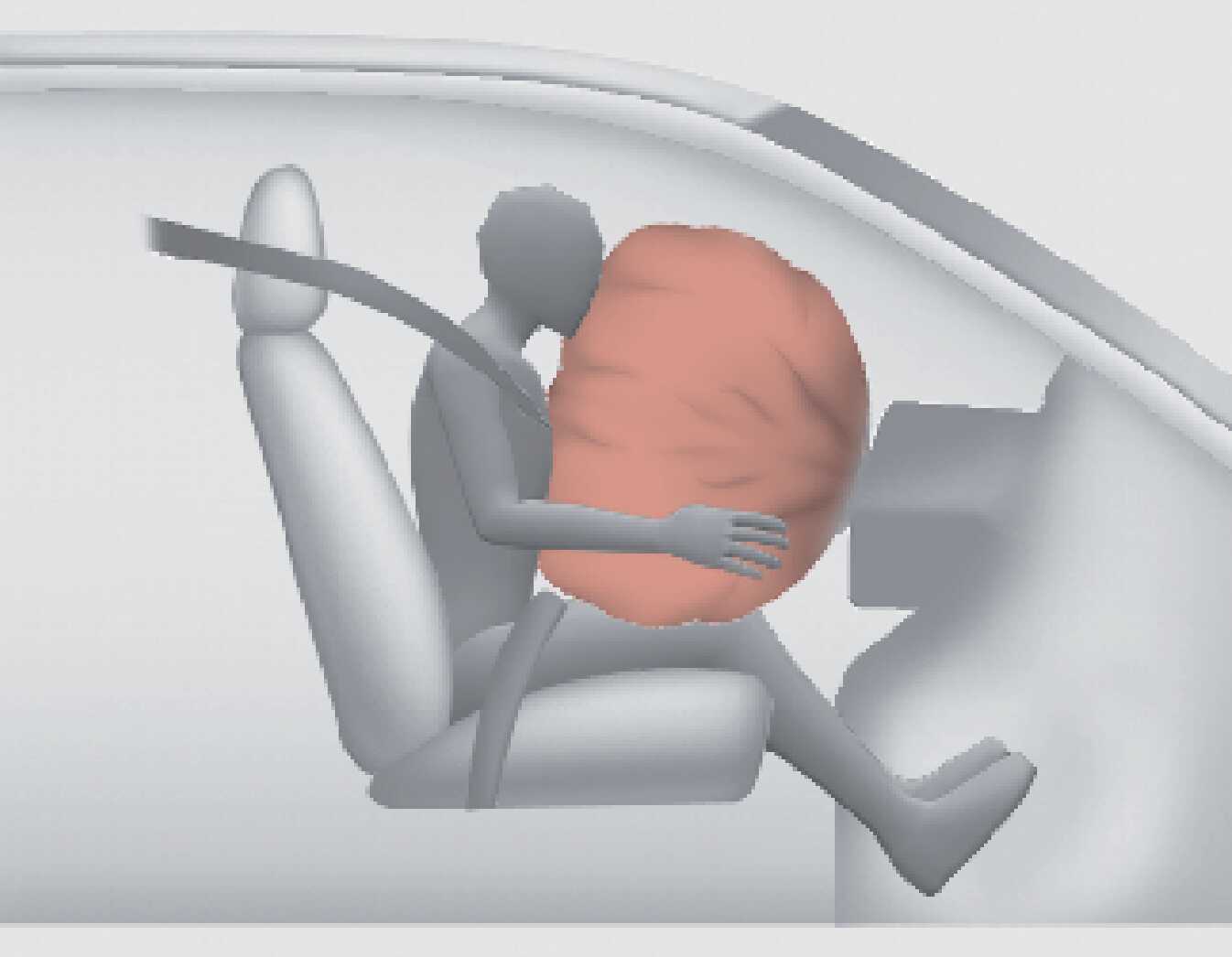
Air bag obstructions
Do not install or place any accessories on the steering wheel, instrument panel, or on the front passenger's panel above the glove box in a vehicle. Such objects may become dangerous projectiles if the air bag deploys.
Flying objects
Do not place any objects (an umbrella, bag, etc.) between the front door and the front seat. Such objects may become dangerous projectiles if the side airbag inflates.
-
If an air bag deploys, there may be a loud noise followed by a fine dust released in the vehicle. These conditions are normal and are not hazardous - the air bags are packed in this fine powder. The dust generated during air bag deployment may cause skin or eye irritation as well as aggravate asthma for some persons. Always wash all exposed skin areas thoroughly with cold water and a mild soap after an accident in which the air bags were deployed.
-
The SRS can function only when the ENGINE START/STOP button is in the ON Position or approximately within 3 minutes after vehicle off. The SRS is not working properly if any of the following situations occur :
-
the SRS airbag warning light does not appear
-
the SRS airbag warning light remains on continuously after illuminating for about 3~6 seconds when the ENGINE START/STOP button is turned to the ON position or after the vehicle is in ready mode
-
the SRS airbag warning light comes on while driving
If this occurs, have your vehicle immediately inspected by an authorized Kia dealer.
-
Before you replace a fuse or disconnect a battery terminal, turn the ENGINE START/STOP button to the OFF position. Never remove or replace the air bag related fuse(s) when the ENGINE START/STOP button is ON position. Failure to heed this warning will cause the SRS air bag warning light to appear.