

Seat Warmer: (if equipped)
The seat warmer is provided to warm the front seats in cold weather.
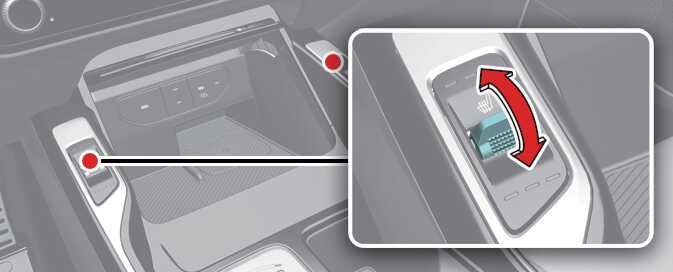
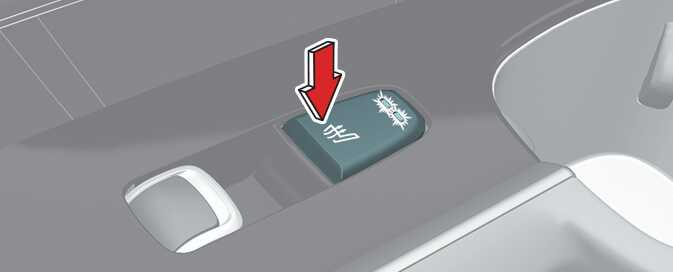
With ENGINE START/STOP button in the ON position:
-
Push either of the levers/switch to warm the driver's seat or the front passenger's seat.
During mild weather or under conditions where the operation of the seat warmer is not needed, keep the levers/switch in the "OFF" position.
The seat warmer defaults to the OFF position whenever the ENGINE START/STOP button is turned on.
-
Each time you press the levers/switch, the temperature setting of the seat will change as follows:
-
Front seat
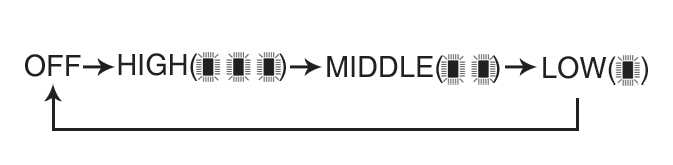 ODEEV068232NR
 -
Rear seat
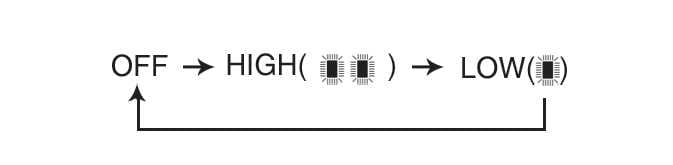 OBDC049453RE
-
The seat warmer automatically controls the seat temperature in order to prevent low-temperature burns after being manually turned ON.
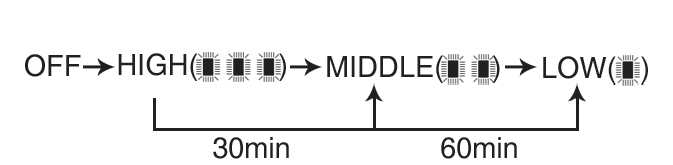
You may manually press the button to increase the seat temperature. However, it will revert to the automatic mode again after a short period of time.
-
When pressing the levers/switch for more than 1.5 seconds with the seat warmer operating, the seat warmer will turn OFF.
When the seat warmer levers/switch are in the ON position, the heating system in the seat turns off or on automatically depending on the seat temperature.
-
When cleaning the seats, do not use an organic solvent such as paint thinner, benzene, alcohol or gasoline. It may damage the surface of the warmer or seats.
-
To prevent overheating the seat warmer, do not place anything on the seats that insulate against heat, such as blankets, cushions or seat covers while the seat warmer is in operation.
-
Do not place heavy or sharp objects on seats equipped with seat warmers. Damage to the seat warming components could occur.
-
Do not change the seat cover. It may damage the seat warmer or air ventilation system.
Seat Warmer Burns
Passengers should use extreme caution when using seat warmers due to the possibility of excess heating causing burns. The seat warmer may cause burns even at low temperatures, especially if used for long periods of time. The driver must exercise extreme care for the following types of passengers:
-
Infants, children, elderly, disabled persons, or hospital outpatients
-
Persons with sensitive skin or those that burn easily
-
Fatigued individuals
-
Intoxicated individuals
-
Individuals taking medication that can cause drowsiness or sleepiness (sleeping pills, cold tablets, etc.)