

Why didn't my air bag go off in a collision? (Inflation and non-inflation conditions of the air bag)
Many types of accidents do not require the air bag to provide additional protection.
These include rear impacts, second or third collisions in multiple impact accidents, as well as low speed impacts.
Air bag inflation conditions
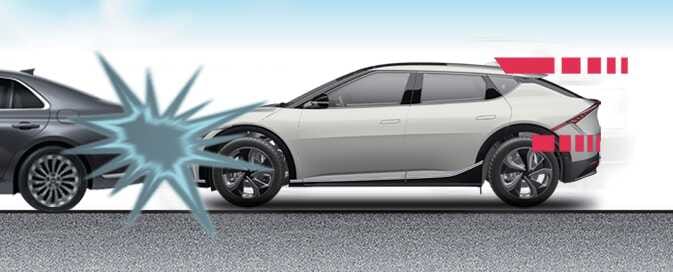 OCV031052L |
Front air bags inflate in a frontal collision depending on several factors, including the severity of the impact of the front collision.
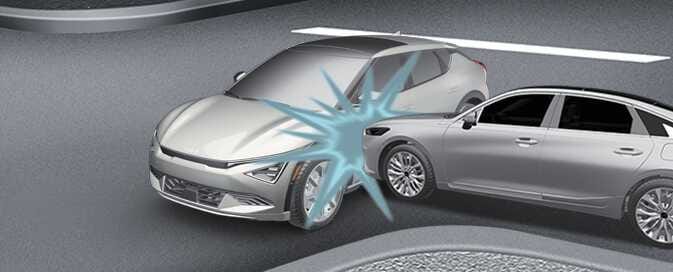 OCV024014N |
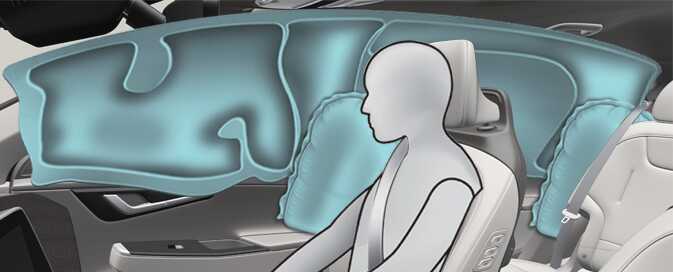 OCV024058N |
Side and/or curtain air bags inflate when side collision sensors detect an impact, depending on several factors, including the severity of the impact from a side collision.
The side and curtain air bags inflate when a rollover sensor detects a rollover.
Although the front air bags (driver’s and front passenger’s air bags) primarily inflate in frontal collisions, they may inflate in other types of collisions if the front impact sensors detect sufficient frontal force in those impacts.
Similarly, although side and curtain air bags inflate in certain side impact collisions, they may also inflate in other types of collisions where sensors detect a side force. For instance, side air bags and/or curtain air bags may inflate if rollover sensors detect the possibility of a rollover (even if none occurs) or in other situations, such as when the vehicle tilts while being towed.
Even if side and/or curtain air bags do not provide impact protection in a rollover, they will deploy to prevent ejection of occupants, especially those who are restrained with seat belts.
If bumps or objects impact the vehicle chassis on unimproved roads, air bags may deploy. Drive carefully on unimproved roads or surfaces not designed for vehicle traffic to prevent unintended air bag deployment.
Air bag non-inflation conditions
|
Air bag non-inflation conditions |
|
|---|---|
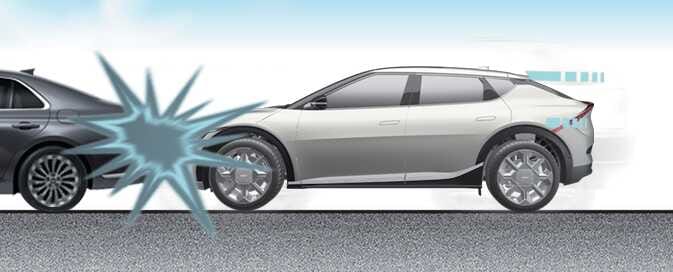 OCV024017 |
Air bags may not deploy in certain low-speed collisions where the air bag would not add any benefit beyond the protection already offered by the seat belts. |
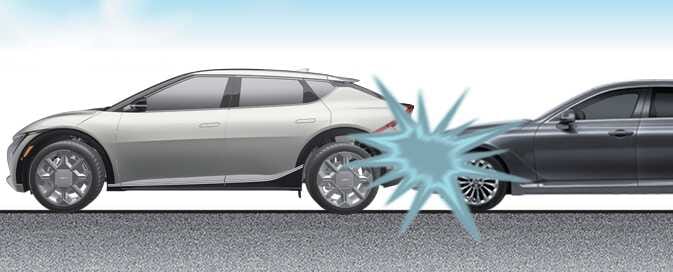 OCV024016N |
Front air bags do not inflate in rear collisions because the impact moves occupants backward. In this case, inflated air bags cannot provide any additional benefit. |
|
OCV024014N |
Front air bags may not inflate in side impact collisions because passengers move toward the direction of the collision. Thus, frontal air bag deployment in side impacts does not provide additional occupant protection. |
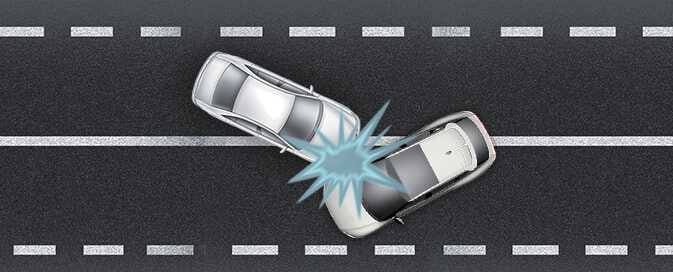 OCV031055N |
In an angled collision, the force of impact may direct the occupants in a direction where the air bags would not be able to provide any additional benefit, and thus the sensors may not deploy any air bags. |
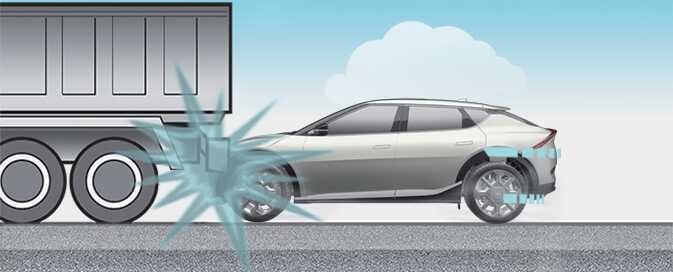 OCV024018 |
Just before impact, drivers often brake heavily. Such heavy braking lowers the front portion of the vehicle causing it to "ride" under a vehicle with a higher ground clearance. Air bags may not inflate in this 'underride' situation because sensors may detect deceleration forces that are significantly reduced by such 'under-ride' collisions. |
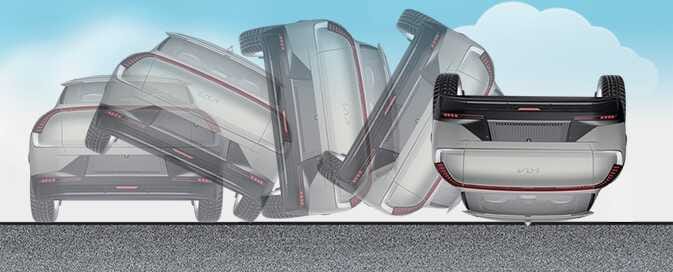 OCV031057N |
Front air bags may not inflate in all rollover accidents when the SRS Control Module (SRSCM) indicates that the front air bag deployment would not provide additional occupant protection. |
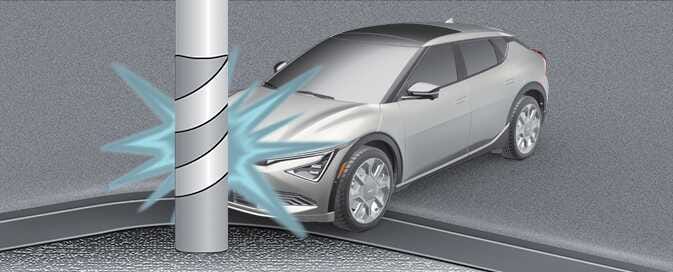 OCV024020N |
Air bags may not inflate if the vehicle collides with an object such as a utility pole or tree. This is because the point of impact concentrates in one area, and the sensors do not receive the full force of the impact. |