

Closing the bonnet
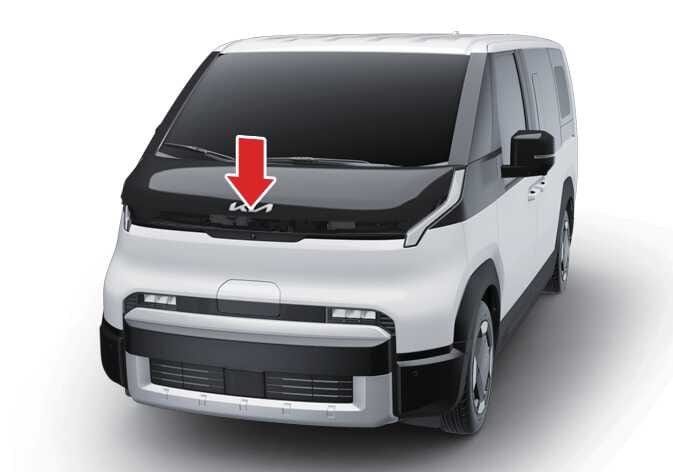 OSW035457L |
-
Before closing the bonnet, check the following:
-
All filler caps in the motor compartment must be correctly installed.
-
Gloves, rags or any other combustible material must be removed from the motor compartment.
-
-
Return the support rod to its clip to prevent it from rattling.
-
Lower the bonnet until it is about 30 cm(12 in.) above the closed position and let it drop. Make sure that it locks into place.
-
Check that the bonnet has engaged properly.
-
If the bonnet can be raised slightly, it is not properly engaged.
-
Open it again and close it with a little more force.
-
The white patterns and small bubbles on the inside of the bonnet are normal phenomena due to the characteristics of the material and manufacturing process.
Proper Waxing Method
-
Make sure the vehicle surface is completely dry and free of moisture before applying wax.
-
Perform the task in a shaded area where the vehicle surface is not hot.
-
Avoid using low-quality or expired wax, as it may cause scratches or discolouration on the painted surface.
-
After removing contaminants such as dirt or tar, be sure to apply wax to those areas.
-
This bonnet is made of composite material and has different characteristics compared to general steel exterior panels.
-
As it is not a painted part, do not use organic chemicals such as paint, clear coat, acetone, benzene, lacquer thinner, or bleach.
-
Do not paint or coat it arbitrarily. The bonnet may deform depending on the painting conditions.
-
Avoid drilling or modifying the structure of the bonnet for self-maintenance or additional component installation. These actions may weaken the bonnet's strength or cause malfunction such as improper closing.
-
Even if external damage seems minor in a collision, there may be significant internal cracks. Be sure to have it serviced at an authorised service centre or partner workshop.
-
Due to the nature of the composite material, surface scratches may occur easily. Do not use products containing abrasives or rough cleaning tools.
-
Be cautious when using compounds, as they may damage the surface.
-
Deep damage caused by sharp metal objects may be difficult to restore, so please use caution.
-
Contaminants such as bird droppings, tar, and tree sap can be removed in the same way as with general painted surfaces.
If using a specialized remover, be sure to follow the product instructions.
-
When using an automatic car wash, fine scratches may appear on the body, which could damage the bonnet surface.
-
Before closing the bonnet, ensure that all obstructions are removed from the bonnet opening. Closing the bonnet with an obstruction present in the bonnet opening may result in property damage or severe personal injury.
-
Do not leave gloves, rags or any other combustible material in the motor compartment. Doing so may cause a heat-induced fire.
-
Always double check to be sure that the bonnet is firmly latched before driving away. If it is not latched, the bonnet could open whilst the vehicle is being driven, causing total loss of visibility, which might result in an accident.
-
Do not move the vehicle with the bonnet raised. The view will be blocked and the bonnet could fall or be damaged.