

Towing service
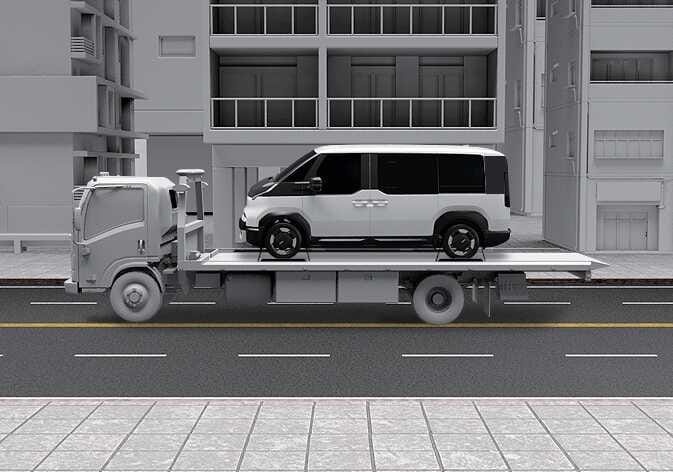 OSW065018L |
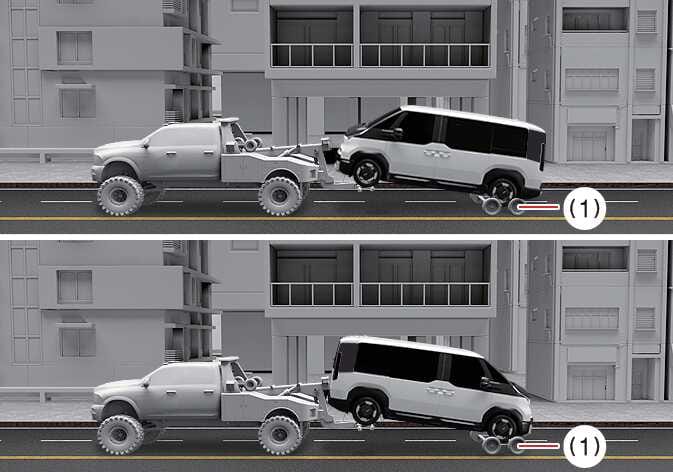 OSW065019L_2 |
-
Wheel dollies
If towing is necessary, we recommend having it done by an authorised Kia dealer or a commercial tow-truck service.
Proper lifting and towing procedures are necessary to prevent damage to the vehicle. The use of wheel dollies (1) or flatbed is recommended.
Side and curtain air bag
If your vehicle is equipped with side and curtain air bag, set the vehicle to OFF position when the vehicle is being towed. The side and curtain air bag may deploy when the vehicle is in POWER ON position and the rollover sensor detects the situation as a rollover.
-
Your vehicle cannot be towed with tyres on the ground. The use of wheel dollies or flatbed is recommended.
-
If the Electronic Parking Brake (EPB) does not release normally, we recommend taking your vehicle to an authorised Kia dealer/service partner by loading the vehicle on a flatbed tow truck and have the system checked.
When flatbed is unavailable
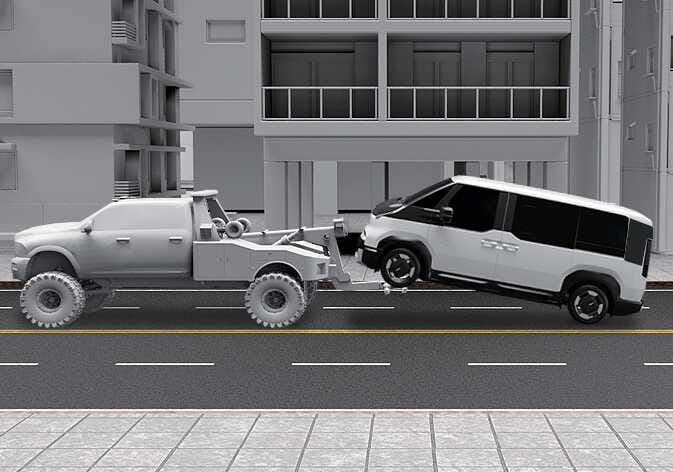 OSW065020L |
2-wheel drive vehicle can be towed with the opposite tyres on the ground (without dollies) and parking brake released before turning off the vehicle.
If you must tow the vehicle using only two wheels, lift the driven wheels off the ground and tow the vehicle.
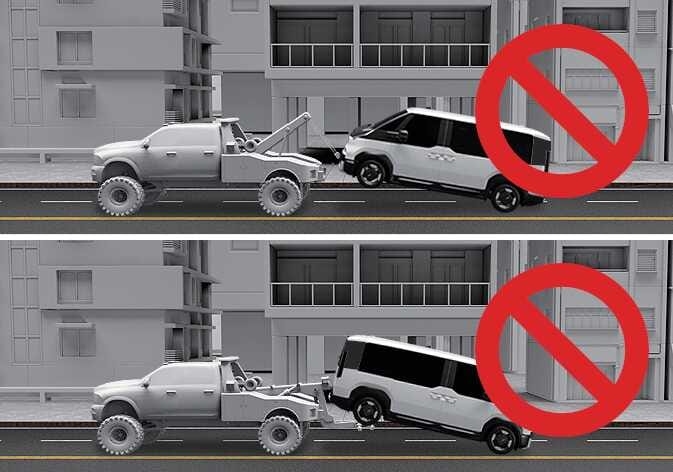 OSW065021L_2 |
|
Precautions when moving a short distance using towing hook and so on before towing vehicle
-
Move short distances within 100 m (328 ft) at a speed of 5 km/h (3 mph) or less only when loading on a tow truck or if the vehicle needs to be repositioned.
-
At this time, the gear must be in the N (Neutral) position and the parking brake must be released. If it is impossible to operate the reduction gear and parking brake, move the vehicle by using dollies, tyre skate, etc. with front wheels, i.e. driving wheel, lifted.
Emergency towing
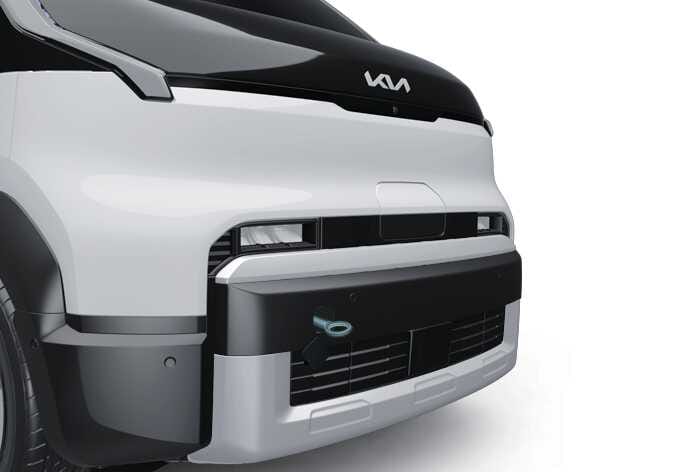 OSW065015 |
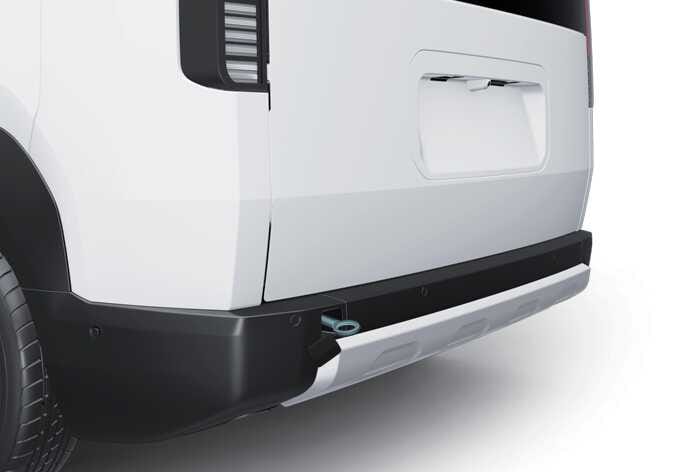 OSW065016 |
-
Remove the towing hook from the TMK case (1) and the towing hook (2).
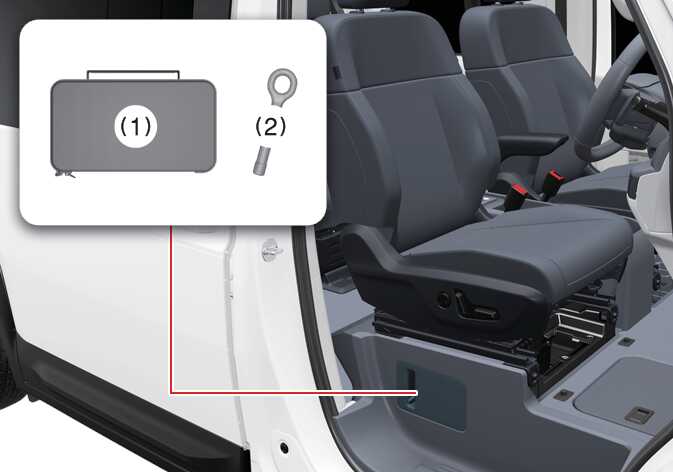 OSW065030R
 -
Remove the hole cover pressing the lower part of the cover on the bumper.
-
Install the towing hook by turning it clockwise into the hole until it is fully secured.
-
Remove the towing hook and install the cover after use.
-
Use extreme caution when towing the vehicle.
-
Avoid sudden starts or erratic driving manoeuvres which would place excessive stress on the emergency towing hook and towing cable or chain. The hook and towing cable or chain may break and cause serious injury or damage.
-
If the disabled vehicle is unable to be moved, do not forcibly continue the towing. We recommend that you contact an authorised Kia dealer/service partner or a commercial tow truck service for assistance.
-
Tow the vehicle as straight ahead as possible.
-
Keep away from the vehicle during towing.
-
Attach a towing strap to the tow hook.
-
Using a portion of the vehicle other than the tow hooks for towing may damage the body of your vehicle.
-
Use only a cable or chain specifically intended for use in towing vehicles. Securely fasten the cable or chain to the towing hook provided.
-
Accelerate or decelerate the vehicle in a slow and gradual manner whilst maintaining tension on the tow rope or chain to start or drive the vehicle, otherwise tow hooks and the vehicle may be damaged.
-
Before towing, check the reducer for fluid leaks under your vehicle. If the reducer fluid is leaking, flatbed equipment or a towing dolly must be used.
-
Towing in this manner may be done only on hard-surfaced roads for a short distance and at low speed.
-
If towing is necessary, we recommend you to have it done by an authorised Kia dealer or a commercial tow truck service. If towing service is not available in an emergency, your vehicle may be temporarily towed using a cable or chain secured to the emergency towing hook under the front (or rear) of the vehicle. Use extreme caution when towing the vehicle. A driver must be in the vehicle to steer it and operate the brakes.
-
Do not use the tow hooks to pull a vehicle out of mud, sand or other conditions from which the vehicle cannot be driven out under its own power.
-
Avoid towing a vehicle heavier than the vehicle doing the towing.
-
The drivers of both vehicles should communicate with each other frequently.
-
Before emergency towing, check if the hook is not broken or damaged.
-
Fasten the towing cable or chain securely to the hook.
-
Do not jerk the hook. Apply it steadily and with even force.
-
To avoid damaging the hook, do not pull from the side or at a vertical angle. Always pull straight ahead.
-
Cargo van does not have rear towing hook hole cover.
Vehicle tie-down hook for shipping (For cargo van)
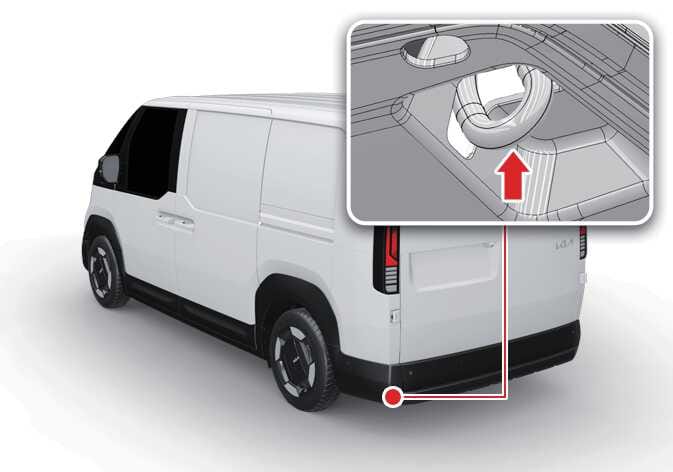 OSW045046L |
Do not use the vehicle tie-down hook for towing purposes. The tie-down hook is designed solely for securing the vehicle during transport. Using this hook for towing may cause it to break, resulting in serious vehicle damage or personal injury.