

Seats
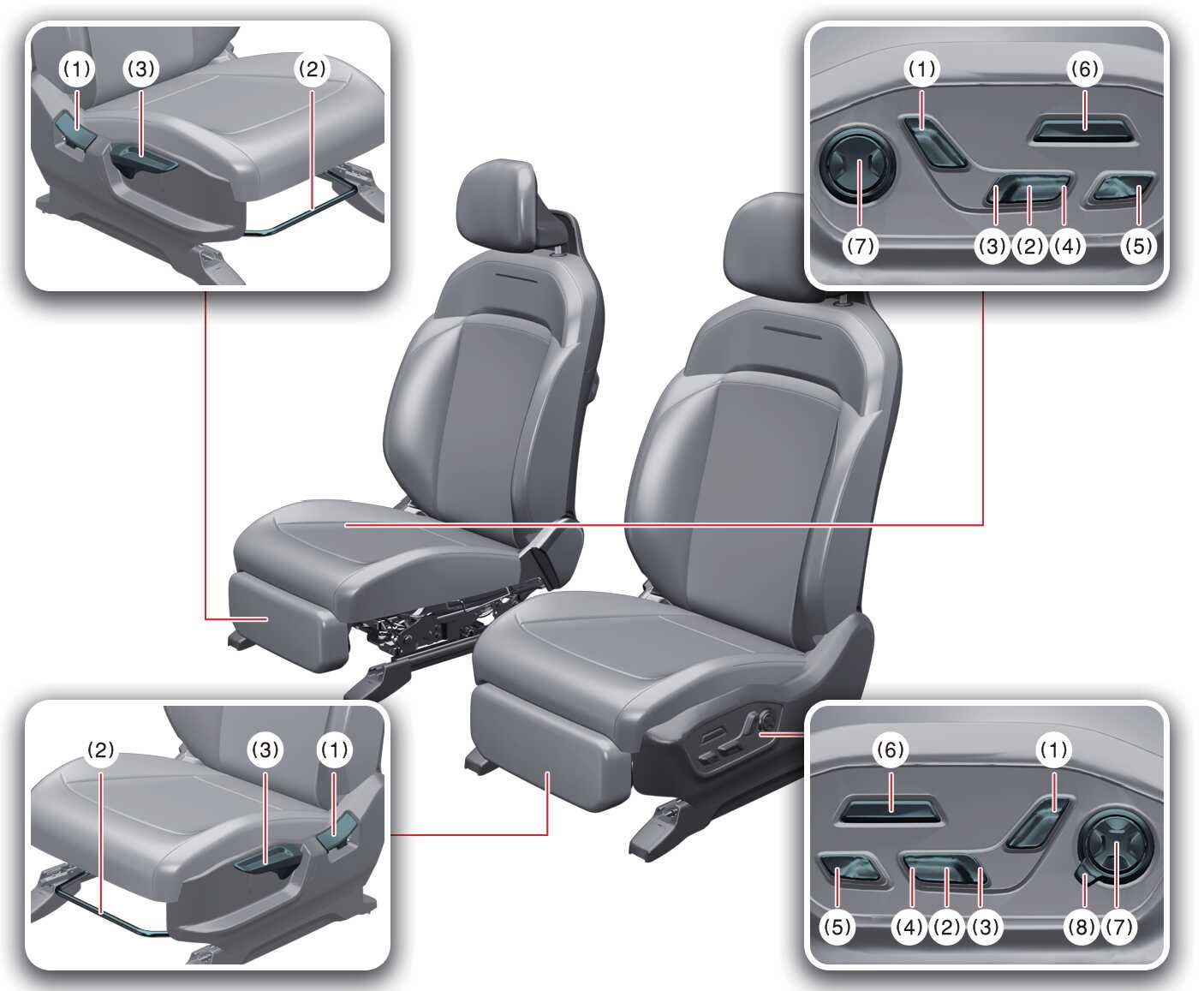
The actual features may differ from the illustration.
-
Seatback angle
-
Forward and backward
-
Seat cushion height
-
Seat cushion tilt
-
Leg support/cushion support
-
Relaxation comfort seat
-
Lumbar support
-
Bolster adjuster
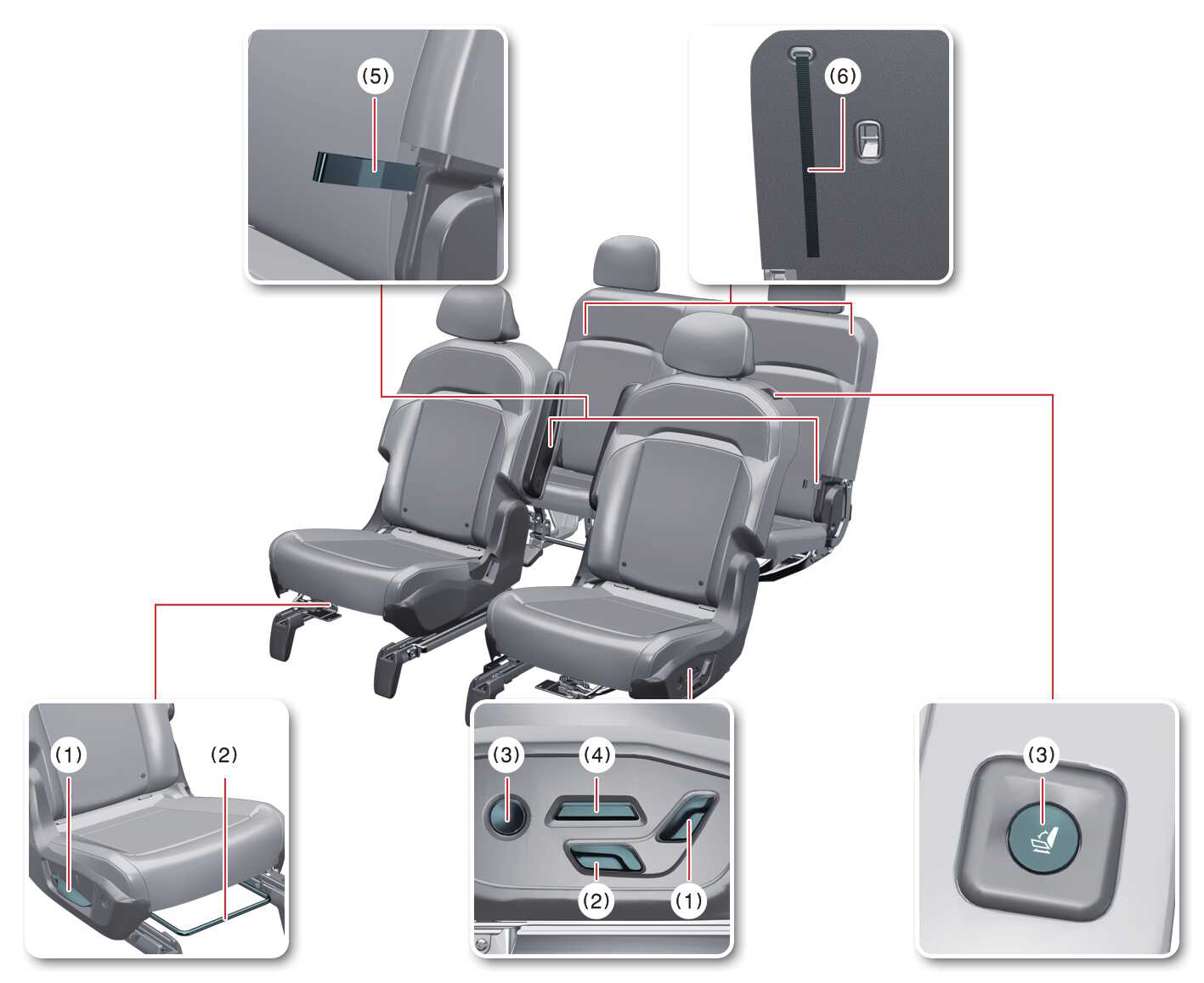
The actual features may differ from the illustration.
-
Seatback angle
-
Forward and backward
-
Walk-in switch
-
Relaxation comfort seat
-
3rd row seatback angle strap
-
3rd row seatback folding strap
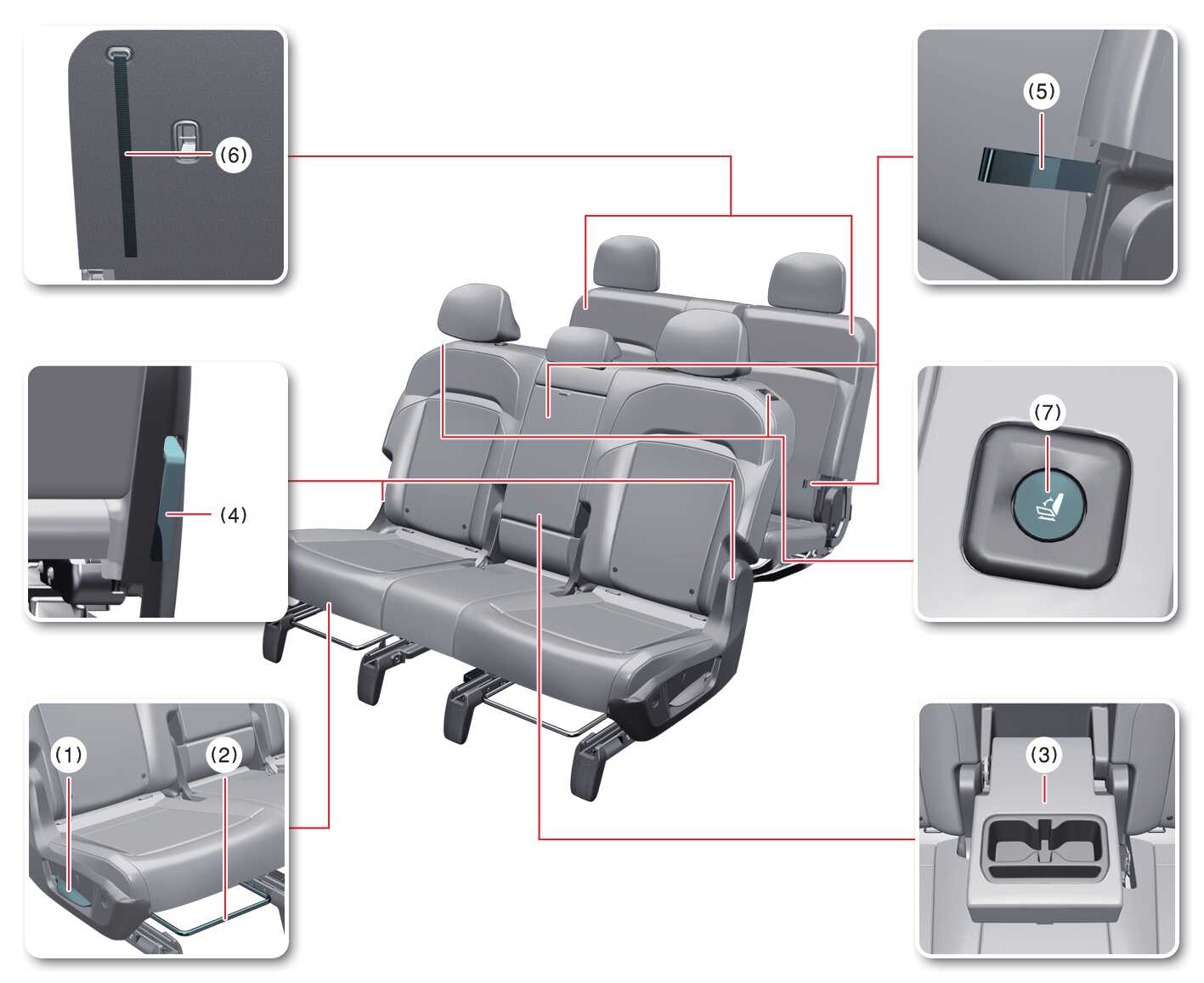
The actual features may differ from the illustration.
-
Seatback angle
-
Forward and backward
-
Armrest
-
2nd row emergency folding strap
-
3rd row seatback angle strap
-
3rd row seatback folding strap
-
Walk-in switch
Loose objects
Loose objects in the driver’s foot area could interfere with the operation of the foot pedals, possibly causing an accident. Do not place anything under the front seats.
Raising a seat upright
Do not press the release lever on a manual seatback without holding and controlling the seatback. The seatback will spring upright, possibly impacting you or other passengers.
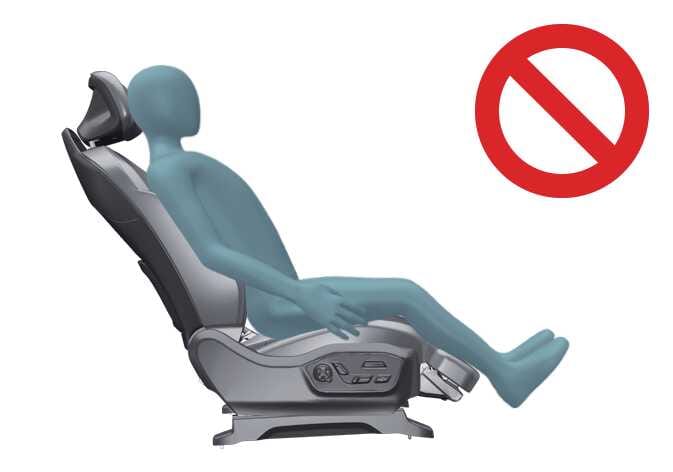
Driver responsibility for passengers
 OLQ2A065083 |
The driver must advise the passengers to keep seatbacks in upright positions whenever the vehicle is in motion. If a seat is reclined during an accident, the restraint system’s ability to restrain the passenger is greatly reduced.
Seat cushion
Occupants should never sit on aftermarket seat cushions. The passenger Occupant Detection System (ODS) may not operate properly, or the passenger’s hips may slide under the lap portion of the seat belt during an accident or a sudden stop.
Driver’s seat
-
Never attempt to adjust the seat while the vehicle is moving. This could result in loss of control of your vehicle.
-
Do not allow anything to interfere with the normal position of the seatback. For example, storing heavy items against the seatback could result in serious or fatal injury in a sudden stop or collision.
-
Sit as far back as possible from the steering wheel while still maintaining comfortable control of your Kia. A distance of at least 10 inches (25 cm) from your chest to the steering wheel is recommended. Failure to do so can result in air bag inflation injuries to the driver.
Rear seatbacks
Always lock the rear seatback before driving. Failure to do so could result in passengers or objects being thrown forward, injuring occupants.
Unexpected seat movement
After adjusting a manual seat, always check that it is locked by shifting your weight to the front and to the back. Sudden or unexpected movement of the driver’s seat could cause you to lose control of the vehicle.
Seat adjustment
-
Do not adjust the seat while wearing seat belts. Moving the seat forward may put strong pressure on the abdomen.
-
Do not place your hand near the seat bottom or seat track while adjusting the seat. Your hand could get caught in the seat mechanism.
Luggage and cargo
Do not stack or pile luggage or cargo higher than the seatback in the cargo area. In an accident, the cargo could strike and injure a passenger. If objects are large, heavy, or must be piled, secure them in the cargo area.
Cargo area
Do not allow passengers to ride in the cargo area under any circumstance. The cargo area is solely for the purpose of transporting luggage or cargo.
Small objects
Use extreme caution when picking up small objects trapped under the seats or between the seat and the center console. Your hands might be cut or injured by the sharp edges of the seat mechanism.
Precautions with seat covers
Use caution when working on the seat cover. A short circuit or disconnection may occur, which could cause an abnormal noise or damage the ventilation system.