

Tires and wheels
Tire care
For proper maintenance, safety, and maximum fuel economy, you must always maintain the recommended tire pressures and stay within the load limits and weight distribution recommended for your vehicle.
Recommended cold tire inflation pressures
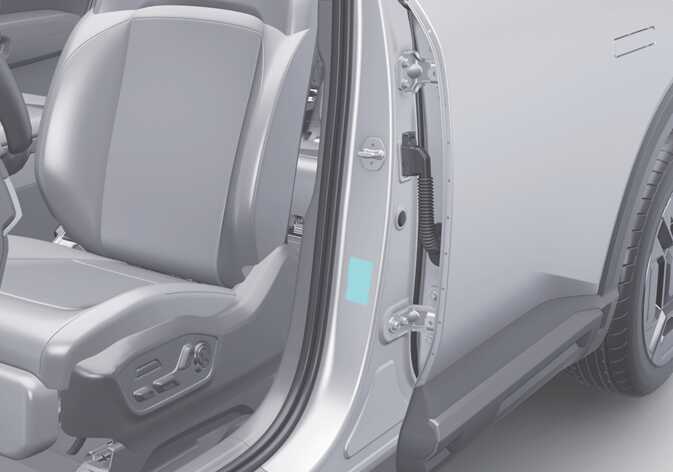 OLQ2A035004 |
You can find all tire specifications (sizes and pressures) on the label attached to the vehicle’s side center pillar.
Failure to maintain the specified tire pressure may result in excessive wear, poor handling, reduced fuel economy, deformation of tires or wheels, harsh riding conditions, possible additional damage from road hazards, or tire failure.
Tire underinflation
Inflate your tires according to the instructions provided in this manual. Regularly check the tire inflation pressure, and correct it as needed at least twice a month and before any long trips. If you fail to take this precaution, you may be driving on underinflated tires, which may not only compromise your vehicle’s driving stability, but may also lead to tire damage and the risk of an accident resulting in serious injury or death. This risk is much higher on hot days and when driving at high speeds for long periods of time.
Check all tire pressures when the tires are cold (after the vehicle has been sitting for at least 3 hours, or you haven’t driven it more than 1 mile (1.6 km) since you started it.)
Maintain the recommended tire pressures for the best ride, vehicle handling, and minimum tire wear.
For recommended tire pressures, refer to Tires and wheels.
Tire pressure
Always follow these recommendations:
-
Check the tire pressure when the tires are cold (after the vehicle has been sitting for at least 3 hours, or you haven’t driven it more than 1 mile (1.6 km) since you started it.)
-
Check the pressure of your spare tire each time you check the pressure of other tires.: (if equipped)
-
Never overload your vehicle. Be careful not to overload the luggage rack (if equipped).
-
Warm tires normally exceed recommended cold tire pressures by 4–6 psi (28–41 kPa). Do not release air from warm tires to adjust the pressure, or the tires will be underinflated.
Tire inflation
Overinflation or underinflation can reduce tire life, adversely affect vehicle handling, and lead to sudden tire failure. This could result in a loss of vehicle control and potential injury.