

Low tire pressure indicator light 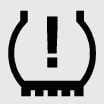
When the TPMS warning indicators are illuminated, one or more of your tires is significantly under-inflated.
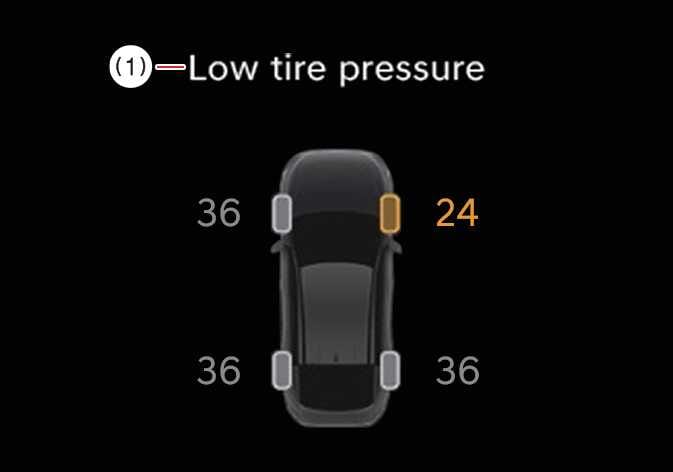 OLQ2A115031 |
|
If the indicator light illuminates, immediately reduce your speed, avoid hard turning, and anticipate increased stopping distances. Stop and check your tires as soon as possible.
Inflate the tires to the proper pressure indicated on the vehicle’s placard or on the tire inflation pressure label (located on the driver side center pillar outer panel). If you cannot reach a service station, or if the tire cannot hold the newly added air, replace the low pressure tire with the spare tire.
The TPMS malfunction and low tire pressure indicator light may illuminate after you restart the vehicle. After that, you have about 20 minutes of continuous driving before you must have the low pressure tire repaired and replaced.
In winter or cold weather, the low tire pressure indicator light may illuminate if you adjusted the tires to the recommended inflation pressure in warm weather. This does not mean your TPMS is malfunctioning; the decreased temperature leads to a proportional lowering of tire pressure.
Check the tire inflation pressure and adjust the tires to the recommended pressure under the following conditions:
-
You are driving from a warm area to a cold area.
-
You are driving from a cold area to a warm area.
-
The outside temperature is extremely high or low.
Filling tires with more air may not meet the conditions required to turn the low tire pressure indicator light off. This is because a tire inflator has a margin of error in performance. The low tire pressure indicator light turns off if the tire pressure is above the recommended tire inflation pressure.
Low pressure damage
Do not drive on low pressure tires. Significantly low tire pressure can cause the tires to overheat and fail, making the vehicle unstable and resulting in increased braking distances and a loss of control.