

Supplemental Restraint System (SRS) components and functions
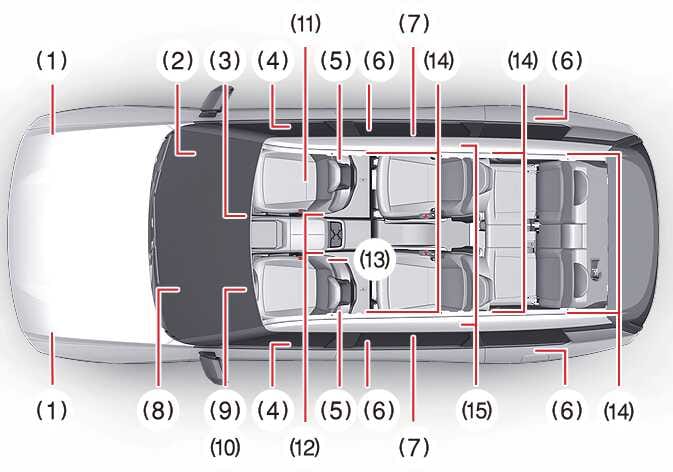 OLQ2A065042 |
The actual position of SRS components may differ from the illustration. The SRS consists of the following components:
-
Front impact sensors
-
Passenger’s front air bag module
-
SRS control module (SRSCM)/rollover sensor
-
Side pressure sensors
-
Front side air bag modules
-
Side impact sensors
-
Curtain air bag modules
-
Driver’s knee air bag module
-
Driver’s front air bag module
-
Air bag warning light
-
Occupant Detection System
-
Front driver/passenger’s seat belt buckle sensor
-
Front center side air bag module
-
Retractor pretensioner assemblies
-
2nd row seat side airbag module
The SRSCM monitors all elements while the ENGINE START/STOP Button is in the ON Position or for approximately 3 minutes after ignition off to determine whether a frontal, near-frontal, or side impact is severe enough to require air bag deployment or pretensioner seat belt deployment.
The SRS air bag warning light on the instrument panel will appear for about 3–6 seconds after turning the ENGINE START/STOP button to the ON position, after which the air bag warning light should go out.
If any of the following conditions occurs, this indicates a malfunction of the SRS. Have the system inspected by an authorized Kia dealer.
-
The light does not turn on briefly when you turn the ignition ON.
-
The light stays on after illuminating for approximately 6 seconds.
-
The light comes on while the vehicle is in motion.
-
The light blinks when the ENGINE START/STOP button is in ON position.
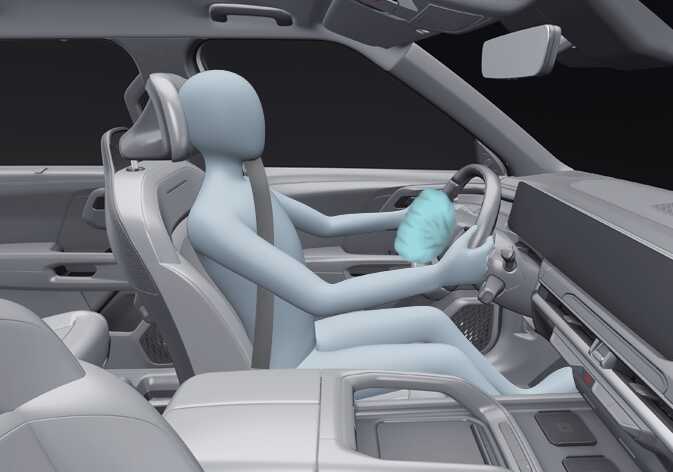 OLQ2A065092 |
The air bag modules are located both in the center of the steering wheel and in the front passenger’s panel above the glove box. When the SRSCM detects a sufficiently severe impact to the front of the vehicle, it will automatically deploy the front air bags.
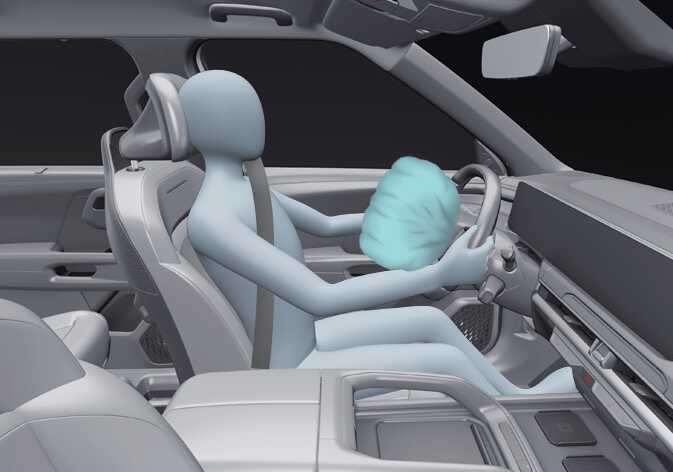 OLQ2A065093 |
Upon deployment, tear seams molded directly into the pad covers will separate under pressure to allow full inflation of the air bags.
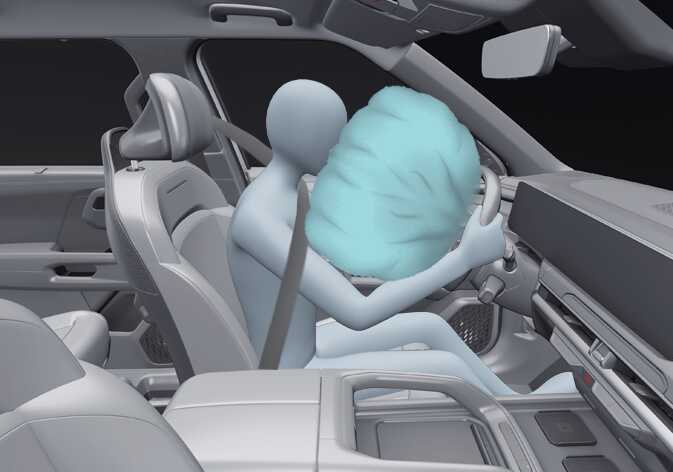 OLQ2A065094 |
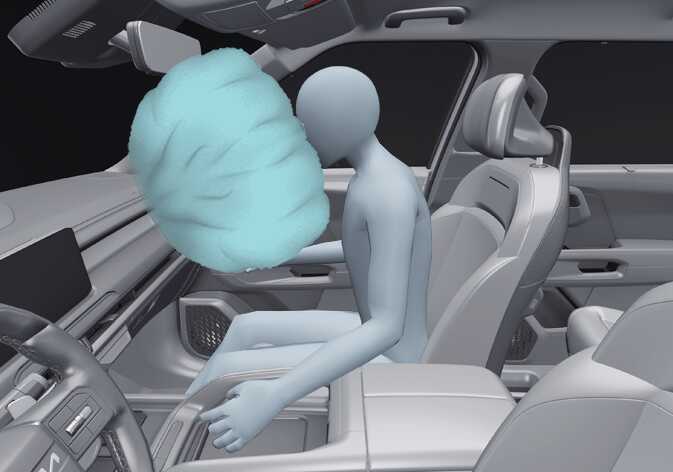
A fully inflated air bag, in combination with a properly worn seat belt, slows the driver’s or the passenger’s forward motion, reducing the risk of contact with the steering wheel or instrument panel and distributing the force more evenly over the body. After complete inflation, the air bag immediately starts deflating, enabling the driver to maintain forward visibility and the ability to steer or operate other controls.
 OLQ2A065095 |