

Adjusting the height of shoulder belt
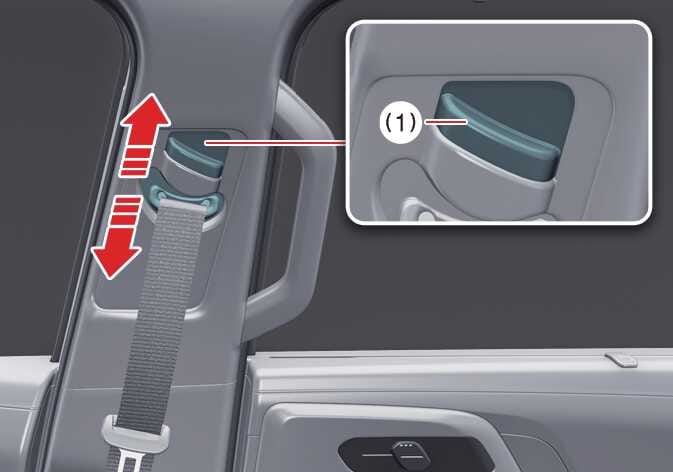
You can adjust the height of the shoulder belt anchor to 1 of 4 positions for maximum comfort and safety.
 OLQ2A065029 |
The height of the adjusted seat belt should not be too close to your neck, or you will not get the most effective protection. The shoulder portion should be adjusted so that it lies across your chest and midway over your shoulder near the door, not your neck.
To adjust the height of the seat belt anchor, lower or raise the height adjuster into the appropriate position:
- To raise the height adjuster, pull it up.
- To lower it, push it down while pressing the height adjuster button (1).
Release the button to lock the anchor into position. Try sliding the height adjuster to make sure that it has locked into position.
Improperly positioned seat belts can cause serious injuries in an accident.
Shoulder belt positioning
Verify that the shoulder belt anchor is locked into position at the appropriate height. Never position the shoulder belt across your neck or face, , or under your arm. Improperly positioned seat belts can cause serious injuries in an accident.
Seat belt replacement
After a collision, the entire seat belt assembly should be replaced, even if damage to the webbing or assembly is not apparent. Always replace any belts that are not functioning properly.
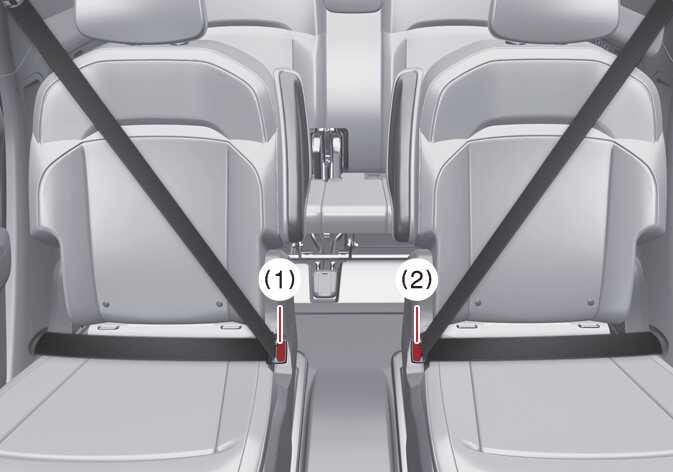
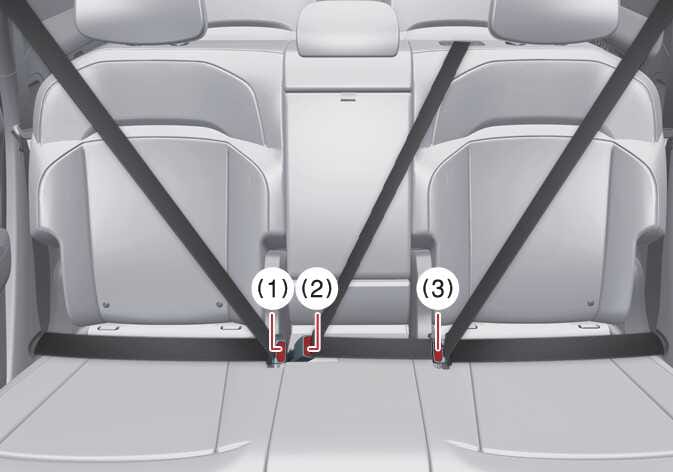
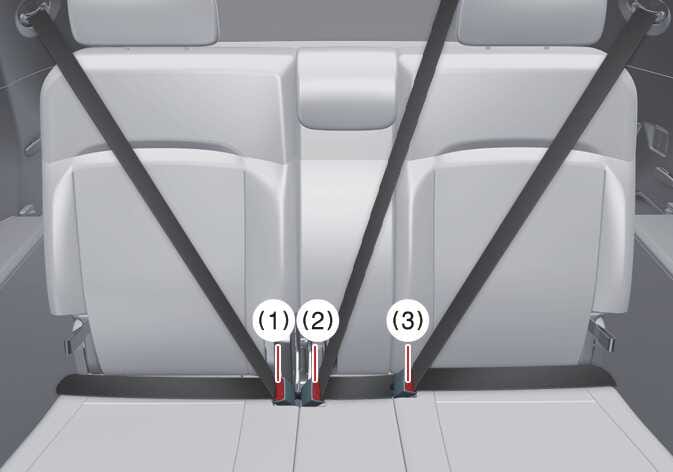
A properly buckled seat belt will be locked into the buckle on each seat cushion.
 OLQ2A065030 |
|
 OLQ2A065106 |
|
 OLQ2A065031 |
|
Prior to buckling the rear seat belts, ensure that the latch matches the seat belt buckle. Forcefully connecting the left or right seat belt to the center buckle will not secure the occupant in an accident.