

Air bag inflation conditions
Front air bags
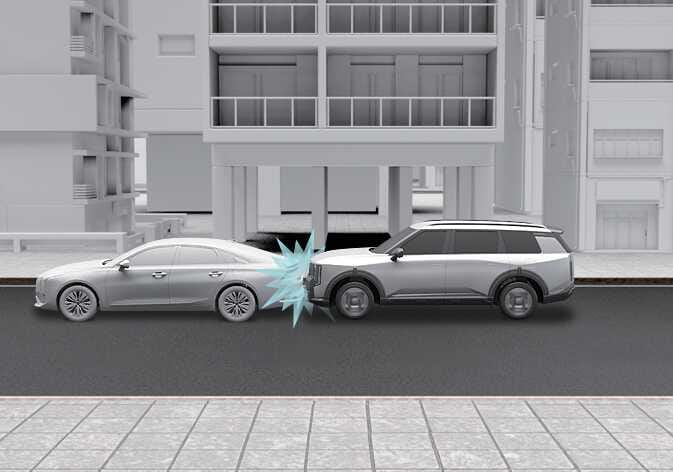 OLQ2A065053 |
Front air bags inflate in a frontal collision depending on several factors, including the severity of the impact of the front collision.
Side and curtain air bags and front center side air bag
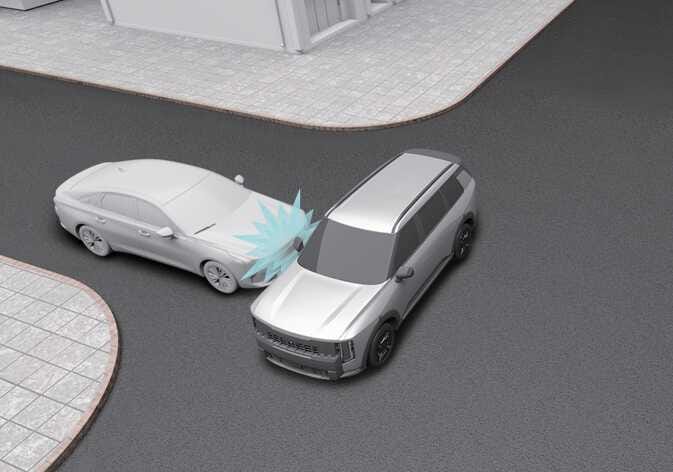 OLQ2A065054 |
The actual air bags in the vehicle may differ from the illustration.
Side and/or curtain air bags and front center side air bag inflate when side collision sensors detect an impact, depending on several factors, including the severity of the impact from a side collision.
The side and curtain air bags and front center side air bag inflate when a rollover sensor detects a rollover (or possible rollover).
Although the front air bags (driver’s and front passenger’s air bags) primarily inflate in frontal collisions, they may inflate in other types of collisions if the front impact sensors detect sufficient frontal force in those impacts.
Similarly, although side and curtain air bags and front center side air bag inflate in certain side impact collisions, they may also inflate in other types of collisions where sensors detect a side force. For instance, side and curtain air bags and front center side air bag may inflate if rollover sensors detect the possibility of a rollover (even if none occurs) or in other situations, such as when the vehicle tilts while being towed.
Even if side and curtain air bags and front center side air bag do not provide impact protection in a rollover, they will deploy to help prevent ejection of occupants, especially those who are restrained with seat belts.
If bumps or objects impact the vehicle chassis on unimproved roads, air bags may deploy. Drive carefully on unimproved roads or surfaces not designed for vehicle traffic to prevent unintended air bag deployment.