
Windshield defrosting and defogging

Windshield heating
Do not use the  or
or  position during cooling operation in extremely humid weather. The difference between the temperature of the outside air and
the windshield could cause the outer surface of the windshield to fog up, causing loss of visibility. In this case, set the
mode selection to the
position during cooling operation in extremely humid weather. The difference between the temperature of the outside air and
the windshield could cause the outer surface of the windshield to fog up, causing loss of visibility. In this case, set the
mode selection to the  position and fan speed control to the lower speed.
-
For maximum defrosting, set the temperature control to the extreme right/hot position and the fan speed control to the highest speed.
-
If warm air to the floor is desired while defrosting or defogging, set the mode to the floor-defrost position.
-
Before driving, clear all snow and ice from the windshield, rear window, outside rear view mirrors, and all side windows.
-
Clear all snow and ice from the hood and air inlet in the cowl grill to improve heater and defroster efficiency and to reduce the probability of fogging up the inside of the windshield.
Defogging inside windshield with the automatic climate control
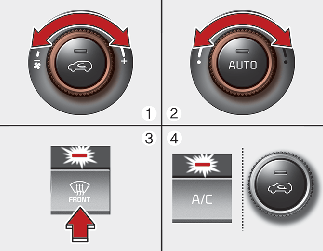 ).
).
If the air conditioning and outside (fresh) air position are not selected automatically, adjust the corresponding button manually.
If the position is selected, lower fan speed is adjusted to a higher fan speed.
Defrosting outside windshield with automatic climate control
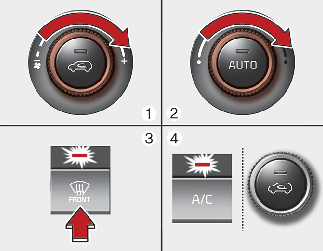 ).
).
Defogging logic (if equipped)
or position.
To cancel automatic defogging logic or return to the automatic defogging logic, do the following.
Turning the defogging logic on or off
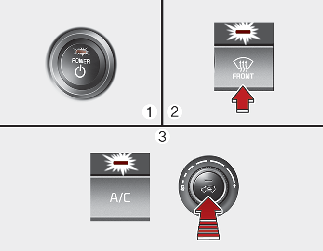 ).
).
The recirculation indicator blinks 3 times in 0.5 second intervals. It indicates that the defogging logic is canceled or returned to the programmed status.
If the battery has been discharged or disconnected, it resets to the defog logic status.
Auto defogging system
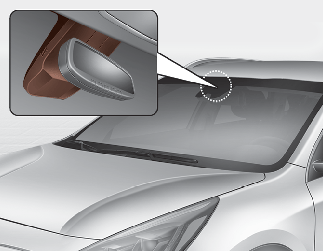
The auto defogging system operates when the heater or air conditioning is on.
The indicator illuminates when the auto defogging system senses the moisture on the inside of the windshield and operates.
The auto defogging system addresses excess moisture on the inside of the windshield in stages. For example if auto defogging does not defog inside the windshield at step More Details Outside air position, it tries to defog again at step More Details Operating the air conditioning.
Turning the auto defogging system on or off
-
Press the front windshield defroster button for 3 seconds when the POWER button is in the ON position.
When the ADS system is canceled, the defroster button indicator will blink 3 times per 0.5 sec.
When the ADS system is reset, the defroster button indicator will blink 6 times per 0.25 sec.

Do not remove the sensor cover located on the upper end of the passenger side windshield glass. Damage to the system parts could occur and may not be covered by your vehicle warranty.