
Function description
Blind-Spot Collision Warning
-
Blind-Spot area
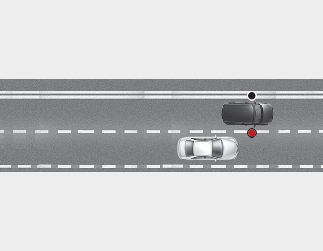
The blind spot detection range varies relative to vehicle speed.
Note that if your vehicle is traveling much faster than the vehicles around you, the warning will not occur.
-
Closing at high speed
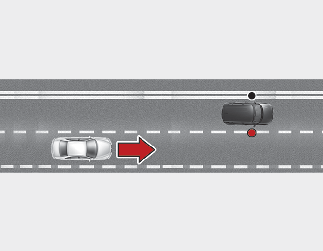
The Lane Change Assist feature will warn you when it detects a vehicle is approaching in an adjacent lane at a high rate of speed. If the driver activates the turn signal when the function detects an oncoming vehicle, the function sounds an audible warn.
Blind-Spot Collision-Avoidance Assist
Blind-Spot Collision-Avoidance Assist detects the front lane through the front view camera installed on the upper front windshield and detects the side/rear areas through rear corner radars.
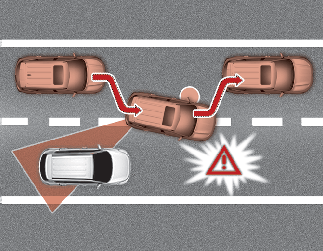
Blind-Spot Collision-Avoidance Assist may activate differential braking in accordance with a colliding possibility with an approaching vehicle while changing lanes. It is to lower the colliding risk or mitigate the colliding damage.

-
Always be aware of road conditions while driving and be warn for unexpected situations even though Blind-Spot Collision Warning is operating.
-
Blind-Spot Collision Warning and Blind-Spot Collision-Avoidance Assist are supplemental functions to assist you. Do not entirely rely on the functions. Always pay attention, while driving, for your safety.
-
Blind-Spot Collision Warning and Blind-Spot Collision-Avoidance Assist are not substitutes for proper and safe driving. Always drive safely and use caution when changing lanes or backing up the vehicle.
Blind-Spot Collision Warning and Blind-Spot Collision-Avoidance Assist may not detect every object alongside the vehicle.